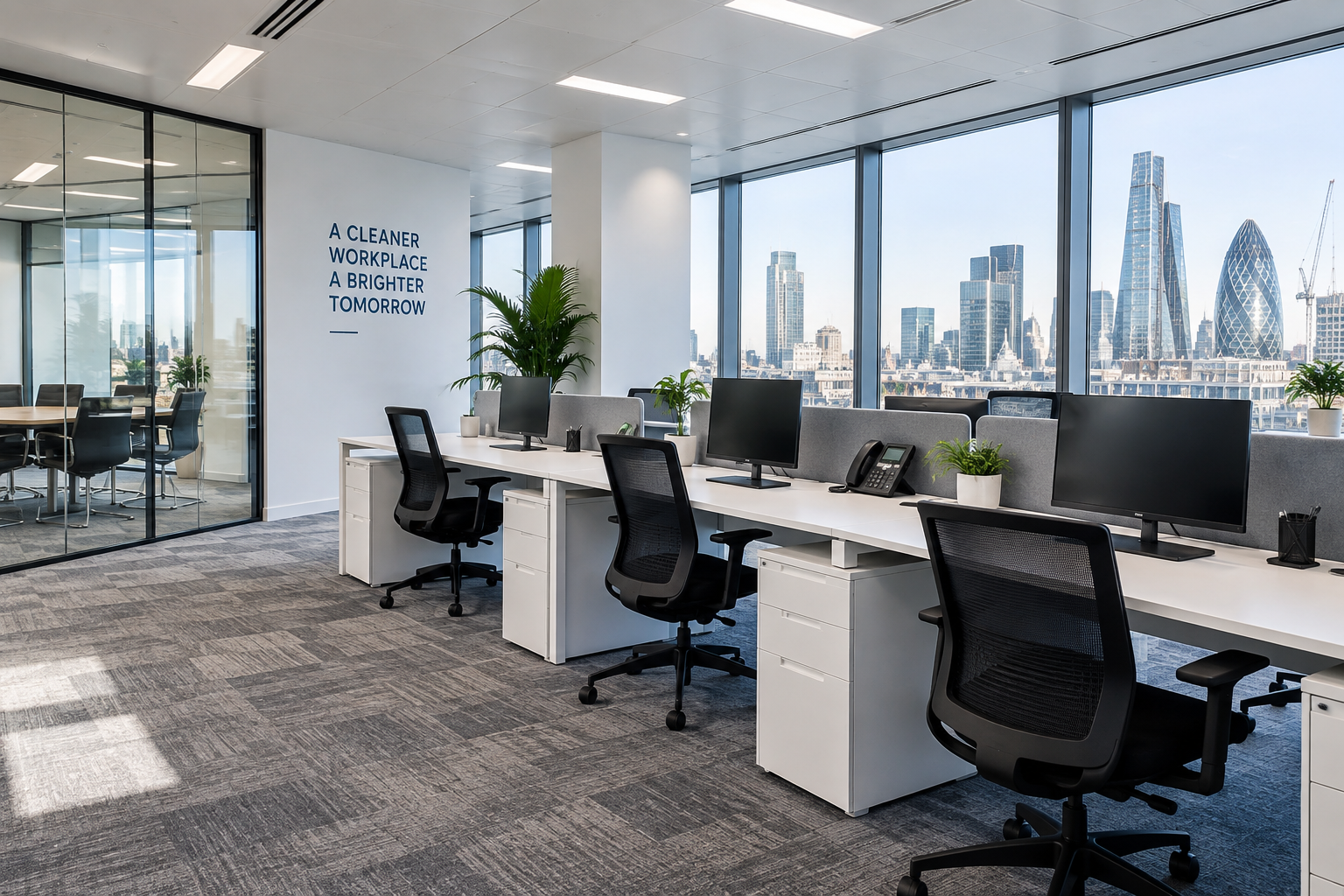
Office Cleaning for Hybrid Workplaces in London
A practical plan for busy team days, shared desks and quieter periods.

Hybrid working changes how an office gets dirty. A meeting-heavy Tuesday may leave shared tables, kitchens and washrooms needing attention, while a quiet Friday creates an opportunity for more detailed work. Simply reducing every cleaning task when fewer people attend can leave the busiest parts of the building poorly served.
For London office managers, a better starting point is a cleaning plan based on actual use. This guide explains how to map demand, protect essential daily tasks and review the results without making the schedule unnecessarily complicated.
Start with a two-week picture of office use
Before changing your cleaning hours, record which areas are used and when. Aggregate attendance figures, meeting-room bookings and a short walk-round are usually more useful than assumptions about which days are quiet. There is no need to collect individual employees’ movements for this exercise.
Note the busiest arrival periods, team days, client meetings and catered events. Also record areas that remain in use even when desks are empty: reception, toilets, kitchens and shared circulation routes. In a multi-let London building, check where your landlord’s responsibilities end and your own cleaning specification begins.
Separate essential tasks from flexible work
A practical specification has two parts. The first protects spaces that need attention whenever the office is occupied. The second covers work that can move between days or follow an agreed periodic programme.
- Occupied-day priorities: washrooms, used kitchen surfaces, bins, visible spillages, reception presentation and frequently handled shared touchpoints.
- Usage-led tasks: cleaning occupied desks, resetting meeting rooms and increasing attention to busy breakout areas.
- Periodic tasks: detailed edges, accessible high-level dusting, internal glass and planned floor care, where included in the specification.
Agree exactly what each task means. “Clean the kitchen” is less useful than a list covering worktops, sink, appliance exteriors, bins and any separately agreed internal appliance cleaning. If you are reviewing office cleaning services in London, give each provider the same written scope so that quotations can be compared fairly.
Use a weekly plan that follows demand
The following is an example, not a universal frequency recommendation. Adjust it to your opening hours, building layout and actual attendance.
- Monday: complete the occupied-day essentials and check that meeting spaces and shared desks are ready for the week.
- Tuesday and Wednesday: if these are your busiest team days, prioritise washrooms, kitchen use, meeting-room turnover and the areas receiving the most footfall.
- Thursday: keep the essential routine and inspect any issues reported during the busiest days.
- Friday: if the building is quieter, use agreed access windows for detailed work that is harder to complete around staff.
An empty workstation does not automatically need the same service as a heavily used one. Equally, a quiet desk floor does not mean that a busy reception or shared washroom can be overlooked. Make changes by area and task rather than cutting all visits in proportion to headcount.
Make shared desks easier to clean
Hot-desking works better when staff and cleaners understand the handover. Set a clear-desk expectation, provide a place for belongings and agree how abandoned items should be handled. Cleaning staff should not have to move confidential papers or guess whether equipment can be unplugged.
Include shared keyboards, phones and other equipment only where the cleaning method has been agreed and is compatible with the manufacturer’s instructions. Cleaning products, application methods and any required contact times should follow the relevant product guidance. Avoid treating every surface as interchangeable.
Plan access and building logistics
London offices can have restricted loading access, security-controlled lifts and landlord rules on waste movements. Confirm the cleaning team’s entry arrangements, alarm procedure, permitted work areas and point of contact before changing the timetable.
Where out-of-hours cleaning is appropriate, agree who locks up and how problems are reported. Where daytime work is preferred, identify tasks that can be carried out with minimal interruption. Wet floor work should be planned so that people can use safe alternative routes.
Keep periodic cleaning visible in the budget
A routine visit and a periodic clean solve different problems. Day-to-day vacuuming does not replace a planned assessment of carpet condition, and wiping accessible glass is different from a separate window-cleaning service.
List periodic work in its own section, including the trigger for review, access requirements and whether the cost is included or quoted separately. This prevents a flexible hybrid schedule from quietly losing the less frequent tasks that keep a workplace presentable.
Review quality with a short, repeatable check
Choose a handful of checks that reflect the agreed scope: washroom supplies, kitchen presentation, bins, meeting-room condition and visible floor debris. Record exceptions, who will resolve them and the completion date. Compare like-for-like areas at a similar point in the working day.
Review the plan after a team-day change, a move to additional floors or a sustained change in attendance. A monthly conversation can help identify whether the issue is timing, access, task definition or insufficient cleaning time. Increasing hours is not the only possible response, but some workloads do require more time.
Frequently asked questions
Does a hybrid London office still need daily cleaning?
It depends on occupancy, the areas in use and the agreed standard. Washrooms, kitchens and other heavily used spaces may still need attention on every occupied day, even if some desks are empty. An assessment should determine the right frequency.
Can cleaning visits be moved to quieter days?
Some detailed tasks can be scheduled for quieter periods. Essential cleaning should still follow when facilities are used. Agree any timetable changes with your provider rather than assuming that all work can wait until the end of the week.
What should we provide when requesting a quote?
Share your floor layout or approximate size, attendance pattern, opening hours, facilities, preferred access times and any landlord restrictions. Include your current task list and the specific problems you want the new plan to address.
Discuss a cleaning plan for your London workplace
Complete Clean Management provides office cleaning services for London businesses. To discuss a schedule that reflects how your workplace is used, request a cleaning quotation. Explain your busiest days, shared facilities and access arrangements so the proposed service can address your priorities.