
Complete Clean Management · North London
Office Cleaners Cockfosters
Professional office cleaning tailored to your premises, working hours and priorities.
Request a free quote Call 0203 092 2297


Office cleaning for the way your Cockfosters workplace operates
A useful office cleaning service starts with the workplace itself. Complete Clean Management can discuss office cleaning in Cockfosters around the rooms your organisation occupies, the facilities people share and the times those spaces are available. The aim of the first conversation is to establish a clear requirement. A suite with private washrooms and a kitchen may need a different arrangement from an office using facilities maintained by a building manager.
Tell us the exact address rather than relying only on the locality name. Premises around Cockfosters Road or near the station can differ in layout, access and occupation. The location identifies the site, but those practical details explain the work. An office with several small rooms should not automatically receive the same specification as an open workspace simply because their floor areas are similar.
You can read the office cleaners London overview for the wider service. For a Cockfosters enquiry, describe what you want maintained and what you would like to improve. We can then discuss the information needed for an assessment and a quotation. The resulting proposal should make the tasks, attendance and responsibilities understandable enough for your organisation to approve and manage.
From an initial enquiry to a useful cleaning brief
Your first enquiry can be straightforward. Give the address, approximate size, usual occupancy and preferred service times. Identify workrooms, meeting areas, kitchens and toilets, including small facilities away from the main office. Mention separate floors or a shared entrance. This provides a useful starting point without requiring you to prepare a technical document before speaking to the team.
Explain why you are reviewing the service. You may be preparing a move, bringing more staff into the office or seeking clearer attention to particular rooms. Concrete examples help: a kitchen that becomes busy on certain days, a meeting room unavailable during visits or an unclear responsibility for bin areas. A practical brief connects the desired result with the conditions that affect it instead of reproducing a generic task list.
It also helps to identify the people involved. The person approving a contract may be different from the colleague managing everyday access. Name both roles where relevant, and explain whether a landlord or managing agent must approve arrangements. This gives practical and commercial questions an appropriate route. The purpose is a proposal based on information your organisation can confirm, with important assumptions resolved before the agreed work begins.

Defining the boundary between office and communal spaces
A shared building needs a clear division of cleaning responsibility. The main lobby, stairs or communal toilets may already be maintained through a landlord arrangement. Your own contract may only need to cover the interior of the tenancy. Another property may leave responsibility for a private stairway or waiting area with your organisation. Check the position before those spaces are included in a quotation request.
A simple room list can record that boundary. Include smaller rooms and routes that might otherwise be forgotten, and note who is responsible for each. If a shared landing is uncertain, ask the property manager rather than assume another contractor is dealing with it. This reduces the risk of missed work and helps avoid duplicate charges for a service already provided elsewhere. It also gives the office contact a practical reference when a question arises.
Activities have boundaries as well as areas. Maintaining accessible surfaces is different from moving heavy furniture, handling confidential paperwork or providing external waste collections. State additional requirements explicitly and ask how they will be assessed. A useful specification describes inclusions, exclusions and separately approved work, so neither staff nor cleaners have to interpret an undefined promise to look after everything in the building.
Assessing access, storage and the condition of surfaces
Floor area cannot show every part of a cleaning job. Several floors, furniture density, security doors and the route to an available water supply may affect the time and sequence required. The assessment should establish how the included areas can actually be reached and maintained. Identify the authorised entrance, approved waste point and any rooms that someone else needs to release. These conditions belong in the proposal before attendance is fixed.
Storage is another practical consideration. A cupboard used for business records may not be available for equipment, and the property manager may have rules about supplies. Explain what space is genuinely available. Conditions can differ between a daytime survey and an evening visit, particularly where internal doors are locked after staff leave. The allocated service window should contain usable working time rather than depend on access that nobody has confirmed.
The initial condition also matters. Existing stains, damaged fixtures and worn finishes should be recorded so the starting point is understood. Ordinary maintenance cleaning cannot automatically repair a defective material. If additional initial work is appropriate, its scope should be discussed separately from the regular programme. Clear records help early service reviews distinguish inherited conditions, unavailable areas and tasks that were included and could reasonably have been completed.
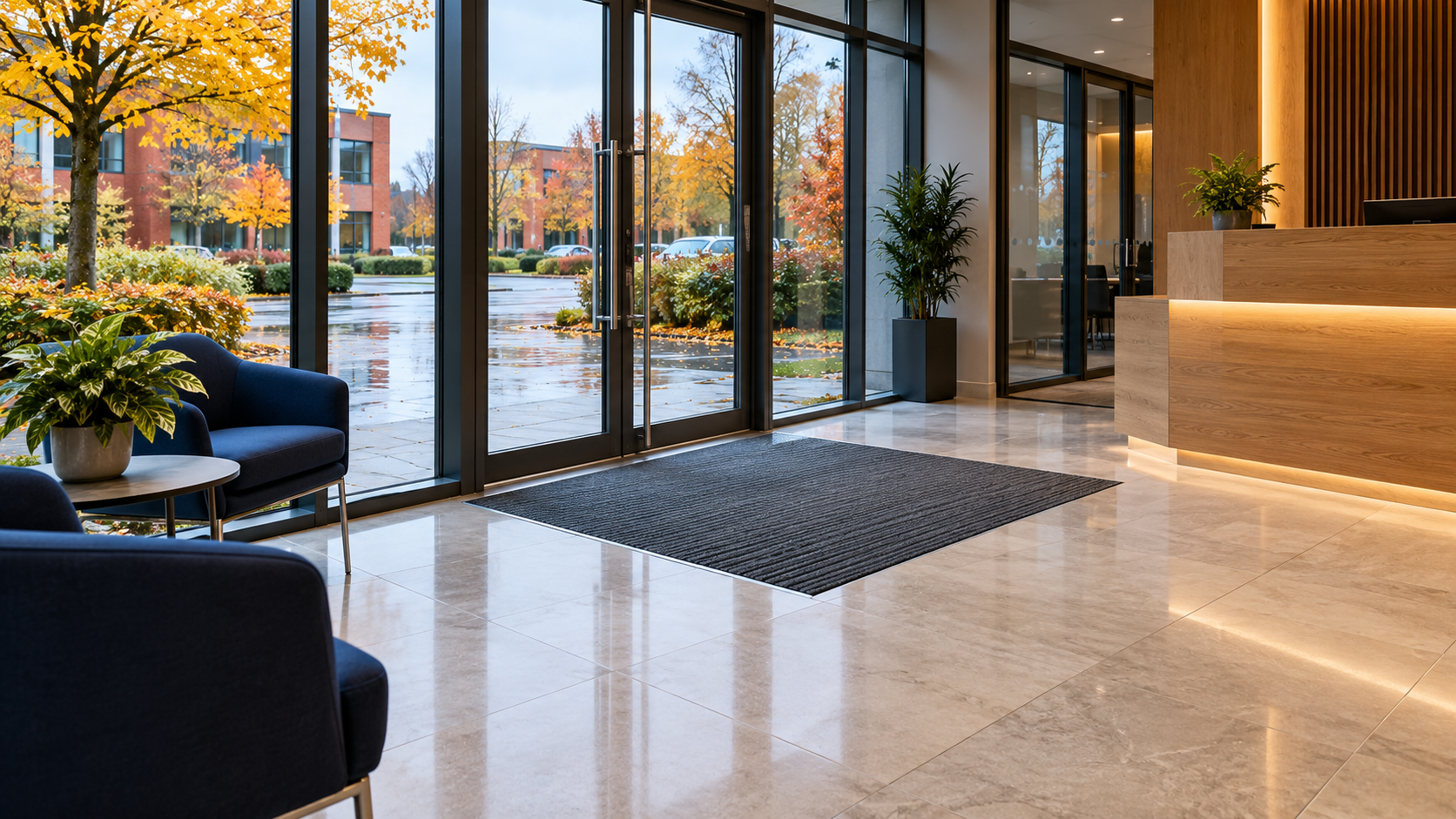
Reception and meeting rooms prepared for your visitors
Reception is a working area with its own handling requirements. Counters may hold visitor information, paperwork and connected equipment that should remain undisturbed. Explain which surfaces will be left accessible and which items must not be handled. Cleaning can support presentation without requiring colleagues to reorganise business materials after a visit. The same principle applies to displays, specialist furnishings and delicate finishes requiring particular instructions.
Entrance matting, accessible internal glass and seating can all influence a visitor's impression. Confirm whether the entrance is private to your office or part of a shared service before adding it to the scope. Within the tenancy, identify the presentation tasks that matter and the times the space is available. Specific requirements give a more useful basis for assessment than a general expectation that the front of the office should always look perfect regardless of access or use.
Meeting rooms need preparation too. Decide who removes refreshments, clears materials and resets furniture. Explain normal bookings and how exceptional appointments will be communicated. A room occupied throughout the cleaning window cannot receive the same attention as one ready for the team. Any extra attendance for events should be discussed separately, with timing and tasks confirmed rather than assumed to fit automatically within the regular routine.
Cleaning workstations with agreed preparation and handling
Desk use can change substantially during a working week. Assigned positions may remain empty on some days while shared workstations receive several users. Informal seating or a small project room can be busy without appearing in a desk count. Explain those patterns during the assessment. Accessible surfaces and surrounding floors can then be considered against actual use, with a sensible basis for reviewing the routine if attendance later increases.
Preparation should be understood by staff before visits begin. Papers, personal belongings and devices can restrict access, so decide what colleagues should clear or secure. The specification should explain which items may be handled and what remains outside the task. A covered worktop and a clear desk present different cleaning opportunities. Recognising that difference supports realistic expectations and avoids leaving confidentiality or handling decisions to an individual cleaner.
Electronic equipment needs an agreed method and scope. Screens, keyboards and specialist devices are not interchangeable surfaces. General office cleaning should not be interpreted as permission to treat every device in the same way. Identify any specific requirement before the proposal is approved. Restricted cupboards and document storage need equally clear access rules. Your organisation retains responsibility for setting those boundaries, while the service instructions should communicate them understandably to the team carrying out the work.
Kitchens and refreshment facilities with clear responsibilities
The size of a kitchen does not always reflect how much attention it needs. A small tea point used throughout the day may be busier than a larger facility serving fewer people. Identify every refreshment space, including areas near meeting rooms. Explain the normal pattern of use so accessible worktops, sinks, tables, bins and flooring can be considered against the actual requirement rather than an assumption based on room size alone.
Separate personal responsibilities from contracted work. Clearing food, managing dishes and leaving shared surfaces accessible may remain with staff unless a different arrangement is expressly agreed. Washing crockery is not automatically part of surface cleaning. If you need additional tasks, ask for them to be described in the specification. An understandable preparation routine helps the team carry out the work agreed and reduces repeated disagreements about an activity that one party expected but the other had not included.
Detailed appliance work should be planned individually. Refrigerator interiors may require food removal and a suitable time without use. Areas behind equipment depend on safe access and appropriate handling. Discuss the appliance, condition and preparation before arranging extra work. The programme should distinguish regular maintenance from periodic activities so everyone knows what happens during routine attendance and how additional requirements will be requested, approved and made ready.
Washrooms and the supply arrangements that support them
Start by establishing which washrooms belong in the brief. Private facilities inside an office may need a different arrangement from shared toilets already maintained by the landlord. The assessment should consider users, condition, accessible fittings, partitions and flooring, together with the times cleaning can take place. Clear responsibility gives the quotation an accurate scope and reduces the chance of an area being overlooked between two separate services.
Consumables require their own conversation. Ordering products, monitoring quantities, storing stock and filling dispensers are distinct activities. Explain who currently handles each and which responsibilities you want considered. We can discuss washroom services alongside the office cleaning requirement, with attention to existing dispensers and compatibility. A written allocation is more dependable than each party assuming that someone else is checking supplies or placing the next order.
Staff should also understand how maintenance faults are reported. A leaking fitting, broken dispenser or blocked drain may require another contractor rather than repeated cleaning. Frequently handled surfaces elsewhere in the office can be considered within the agreed routine using methods suitable for the material. Describe the service proportionately: ordinary cleaning supports the specified presentation and hygiene tasks, but should not be presented as sterilisation of the building or a guarantee against illness.
Floor care matched to materials and concentrated use
A floor-care assessment should look at materials, condition and traffic. The route from an entrance may receive concentrated movement while an enclosed meeting room has a different pattern. Carpet near desks may be difficult to reach because of furniture and cables, and hard finishes may need particular methods. Share relevant material guidance or restrictions you know about. This helps the proposed routine address the floors present rather than apply one assumption across the office.
Everyday maintenance should be distinguished from established stains, wear and damage. Regular vacuuming deals with loose debris; it does not repair a damaged carpet or resolve every old mark. We can discuss commercial carpet cleaning in London where separate assessment is appropriate. Furniture, preparation, material condition and drying time may all affect the task. Agree these practical requirements before a date is fixed so the area can be made available properly.
Movement through the premises needs consideration while work takes place. Explain which routes must remain open and when the office is busiest. Wet work and equipment use require suitable precautions and an appropriate sequence. Staff should know when an affected space can return to use. A workable programme fits the operation of the business while recognising that repairs, replacement and defective finishes are different matters from the cleaning tasks included in the contract.
Selecting cleaning times with security and occupation in mind
A preferred attendance time is useful only when the property can support it. Before choosing morning, evening or daytime cleaning, confirm authorised entrances, opening restrictions and room availability. Necessary facilities must also be accessible. A proposed window should contain usable working time rather than assume that someone will eventually open a locked door or release a meeting room. Explain building-management conditions during the assessment so the timetable is based on confirmed arrangements.
Security information should be managed through an authorised process. Where keys, entry devices or alarms are involved, identify how instructions are issued and updated. A change to an access system needs to reach the service contact before the next affected visit. Your office contact should know what happens if entry fails and how an unavailable area is recorded. Clear procedures reduce delays and avoid informal workarounds that conflict with the building's requirements.
Daytime work may be discussed where suitable for the premises and tasks. Meetings, occupied desks, noise and staff movement can influence the order. Explain regular restrictions early, and communicate exceptional events before they affect the visit. Sometimes a different sequence may be enough; other changes can involve additional attendance or work. Any adjustment should be confirmed with the service contact rather than assumed to fit automatically within the original arrangement.
Reading the tasks and the price as one proposal
A quotation should make the relationship between scope and cost understandable. Office size is relevant, but facilities, furniture, several floors, attendance and access also affect the proposed work. Provide accurate information and ask for assumptions to be explained. The result should describe the service your organisation needs at its actual premises, giving the decision-maker a clearer basis for assessing value and budgeting than a total without a supporting task list.
Compare providers against common requirements. Check included areas, products, equipment, visit pattern and exclusions. Ask about consumables, periodic attention and any initial clean. A lower price may cover fewer activities, so the figures may describe different jobs. We can discuss regular maintenance alongside relevant commercial cleaning services in London. Identify whether you need ongoing attendance, additional deep cleaning or separately planned tasks so each requirement can be considered appropriately.
If you are changing provider, check existing commitments before agreeing the transition and obtain appropriate advice for matters outside the cleaning proposal. From the practical service perspective, confirm contacts, access, storage and staff preparation. Record defects and additional initial work at handover. An agreed starting point helps early reviews distinguish the regular tasks, inherited conditions and requirements that need another conversation before being added to the programme.

Keeping quality reviews and periodic attention practical
Useful feedback names the room, surface and concern, with the time observed and any relevant information about access. Distinguish a missed task from a locked room and a building defect from a cleaning issue. One nominated office contact can gather comments and avoid different departments giving conflicting instructions. This gives the service contact enough detail to understand the concern and consider an appropriate response rather than work from a general statement that something seems wrong.
A recurring issue may require a review of the programme. Additional rooms, more staff or a different attendance pattern can alter the workload without changing the address. Tell the service contact about planned changes so tasks and timing can be reconsidered where necessary. Agreed updates should be recorded instead of allowed to accumulate as informal requests. A current specification is a fairer reference for everyone than one describing an office that now operates differently.
Periodic work needs coordination too. Detailed glass, upholstery or deeper floor treatment may require preparation, different equipment and a suitable release of the area. Establish who gets the space ready and when it can be used again. Resolve property-management approvals before booking. The overall aim is a manageable maintenance plan that supports the office over time, with realistic expectations about materials, condition, access and the work actually included.
Frequently asked questions about office cleaners in Cockfosters
What should I send when asking about a Cockfosters office?
Provide the exact address, approximate floor area, usual number of users and preferred cleaning times. Explain whether the premises are self-contained or part of a shared building, and identify kitchens, washrooms, meeting areas and separate floors. Mention rooms that are regularly unavailable or facilities already maintained by the landlord. It also helps to describe the issues you want a new arrangement to improve. These details give the assessment a useful starting point because the location alone does not explain the work. The final scope should reflect your own premises and the requirements agreed.
Can a compact workplace have its own cleaning specification?
The programme should be discussed against the actual facilities and use, rather than chosen solely from the size of the office. A compact suite with private toilets and a busy kitchen may involve different work from a larger tenancy using shared facilities. Explain the pattern of occupation and the areas that matter most. Tasks, frequency and access need to be considered together so the proposed routine is feasible. If the office later adds desks or changes attendance, tell the service contact so the specification can be reviewed instead of assuming the original arrangement remains suitable indefinitely.
How do we avoid confusion over shared entrance cleaning?
Check responsibility with your landlord or managing agent before the work is included in a quotation. A shared entrance or staircase may already be maintained through a building service, while the office interior remains your responsibility. If you are authorised to arrange communal work, identify the areas and tasks explicitly during the assessment. A written boundary reduces the risk of missed work or duplicated charges. It also gives your office contact a clear reference if a question arises later. Do not assume another contractor is covering an area simply because it lies outside your immediate workroom.
Should staff clear confidential documents before a visit?
Your organisation should establish and communicate the preparation and handling arrangement that suits its work. Cleaners should not be expected to decide which documents may be moved or which materials are sensitive. Explain restricted areas and what staff will leave accessible during the assessment. A covered desk limits the surface available, so the proposed result needs to reflect that condition. If equipment also requires cleaning, discuss the items and appropriate methods separately. Clear instructions support both the cleaning task and your own responsibility for business information, property and access permissions.
Can we arrange a detailed kitchen clean separately?
Describe the additional work, the surfaces or appliances involved and their condition through the service contact. The assessment may need to consider preparation, safe access and how long facilities must remain available. Interior refrigerator cleaning can require food removal; work behind equipment may involve other access arrangements. These tasks should not be assumed to belong within ordinary accessible-surface maintenance. Ask for scope, timing and cost to be confirmed before booking. Staff should know what they need to prepare so the team can carry out the activity agreed without making decisions about personal food or belongings.
What if a meeting makes a room unavailable during cleaning?
Explain normal room-use patterns at the quotation stage and notify the service contact about exceptional bookings early. A different sequence may be feasible, but it needs to fit the tasks and time available. A room that stays occupied cannot receive the same attention as one released and ready for cleaning. Record unavailable access so later reviews have the relevant context. Additional attendance is a separate request and should be confirmed rather than assumed. Clear information about the date, room and expected release time helps the team assess what adjustment can realistically be arranged.
How can we compare two office cleaning quotes fairly?
Read the specifications alongside the totals. Check areas, tasks, frequency, products, equipment and exclusions, together with consumable supply or periodic-work arrangements. Two figures may describe different services even when both refer to the same address and floor area. Ask for unclear assumptions to be explained before choosing a provider. It is also useful to understand how changes are approved if staffing or layout alters. A proposal that connects scope, attendance and price provides a stronger basis for budgeting and future service reviews than a figure without enough detail to understand what the office will receive.
Can one enquiry cover Cockfosters and another North London office?
You can describe several workplaces in one enquiry, with an address, local access contact and outline requirement for each. Different buildings may need different schedules and task lists even if one organisation approves the service. Explore the Barnet office cleaning page or office cleaning in Arnos Grove for other locations, and our office cleaners London overview for the wider approach. Coverage and the final arrangements should be confirmed individually. A central decision-maker and local contacts can help coordinate assessment and keep communication clear once a service is agreed.
Discuss a Cockfosters office cleaning proposal
Begin with the details that explain your workplace and the result your organisation needs. Tell Complete Clean Management the address, approximate size, normal occupancy and preferred service window. Identify the rooms you want maintained, the facilities shared by staff and any responsibilities already held by the property manager. Explain restrictions that affect access and the concerns you want a new proposal to address.
Call the London team on 0203 092 2297 or use the quote button to start the enquiry. Mention a planned move, contract review or preferred start date, together with any building conditions that need to be considered. We can discuss the appropriate next step for assessing the premises and identify the information required before a quotation is prepared for consideration.
A useful programme makes the agreed work understandable: which areas are included, what tasks are expected, when the team can attend and how feedback is handled. It should provide a realistic basis for review as the workplace changes. Additional tasks should be discussed before being added, with preparation and access confirmed where necessary.
For the wider service, visit our London office cleaning overview or explore office cleaning in Bounds Green. Each proposal should reflect the conditions of its own building and the requirements approved for that workplace, rather than rely on a generic description that leaves important responsibilities undefined.
Clients we service
Organisations featured across Complete Clean Management’s client portfolio.
















GOOGLE CUSTOMER REVIEWS
What our customers say on Google
Selected review excerpts from Complete Clean Management’s London Google listing.
★★★★★
“Really happy with the deep clean! The team were friendly, professional and did a fantastic job.”
★★★★★
“We engaged with Complete Clean Management and they came in and did an absolutely fantastic job.”
★★★★★
“We have recently started to use Complete Clean Management for various cleaning services to our domestic and commercial renovation projects.”
★★★★★
“The team is punctual, professional, and pays great attention to detail.”
★★★★★
“We’ve been using this office cleaning service for several months, and it’s been outstanding.”
★★★★★
“Complete Clean Management has transformed the cleanliness of our workspace.”
Selected excerpts, checked 6 November 2026. Leave a Google review ↗