Complete Clean Management · South London
Office Cleaners Coulsdon
Professional office cleaning tailored to your premises, working hours and priorities.
Request a free quote Call 0203 092 2297

Office cleaners for Coulsdon premises that open in stages
When the first employee in a Coulsdon office arrives well before reception opens, there are two deadlines for the cleaning visit. The workplace has to be ready for that employee, and the parts clients will see must be presentable when the first appointment starts. Treat those as separate points in the brief. A locked consultation room may have to be released the night before, while the entrance can only be checked after the building opens. Listing the rooms in order of use gives the people planning the visit something more practical than a single opening time.
Complete Clean Management can discuss a schedule based on the parts of the office you occupy, the areas you share and when your team can give access. Start with the public entrance, then follow the routes staff take to desks, welfare areas and any rooms used by visitors. If the person who opens the office is different from the person who can unlock the shared door, identify both roles. A simple floor plan marked with those details is useful even if the building has only a handful of rooms.
If your responsibilities extend beyond Coulsdon, the office cleaning service for London provides an overview to share with colleagues. For the local brief, say what prompted the enquiry. An office with a welcome area that gets wet during the first wave of visitors will need a different conversation from a workspace with a kitchenette that cannot be released until late in the afternoon. Specific examples help define what should happen first and which work can be arranged for another time.
Follow the foot traffic between the pavement and the office
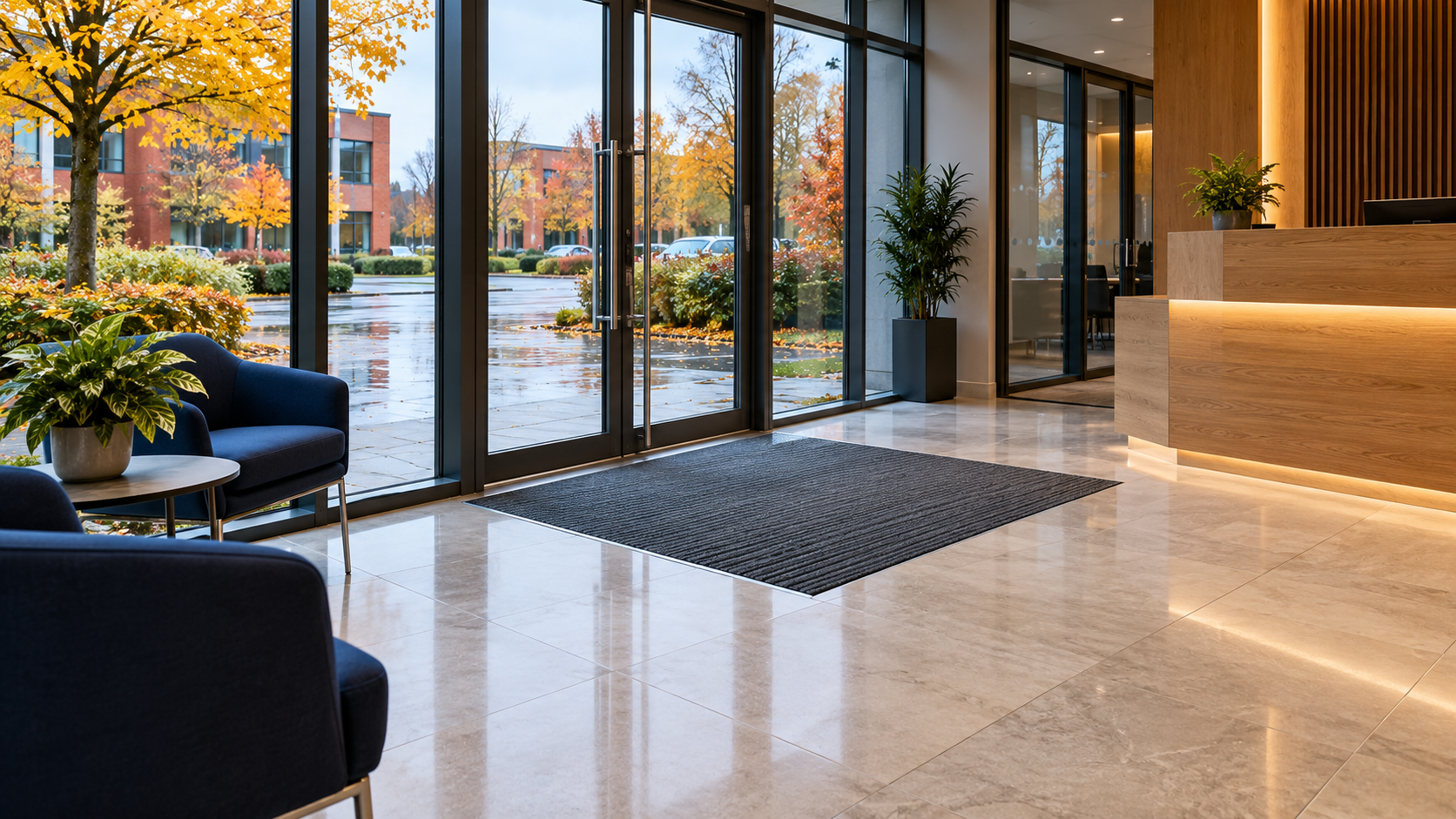
A front door that sits directly on the pavement can expose an office to a different pattern of dirt from an entrance approached through a covered lobby. Look where visitors put their feet when holding the door, then follow their route to the first chair or counter. Staff might arrive through a different entrance and cross the same floor later in the morning. Find the first place each route shows grit or marks. Check at the time complaints normally come in, since a floor checked at closing can look quite different from the same floor just before the first appointments.
Record what type of matting is fitted and who is responsible for it. If a mat has an edge that curls or slips when people turn towards the counter, send that issue to the person who looks after the entrance. Routine work around a mat is easier to specify when you know whether it can be lifted and whether anyone needs to clear the area first. Describe door clearance and any furniture that blocks access to the edges. A pair of lightweight visitor chairs can often be discussed separately from a fitted bench or heavy storage cabinet.
Agree how the entrance can be kept usable while work is carried out. If it is the only accessible route, tell the provider before deciding on the order and timing. Some businesses can release the entire area before opening. Others may need to discuss which section can be worked on while the door stays in use. Record who has authority to change a route and who can tell staff or visitors. The result should fit the way the building actually operates, including days when appointments start earlier than usual.

Make the weekly occupancy pattern visible
A hybrid workplace may be full on a Tuesday and almost empty on a Friday. An office with client appointments can show a completely different pattern, with quiet desks on the same day that the waiting area is at its busiest. Look at how people use each room over an ordinary week. Ask which desks are occupied, how often the meeting room is used and whether the busiest staff break coincides with a visit. That gives you a way to decide which tasks need a fixed place in the schedule and which should follow use.
Use several examples before making a decision. If one meeting room is normally free after three but gets booked for training at the end of each month, record the training day separately. Identify who updates the person arranging access. Decide which rooms can be worked on first when a room stays occupied. If the room remains unavailable for the whole visit, agree where that is recorded and when it can next be attended to. It should be possible to distinguish a planned exception from a task that was overlooked.
When people change their working pattern, review the rooms that will be affected first. More people at desks may lead to more demand on the kitchen and washrooms, even if the public entrance receives the same number of visitors. A new service offered by appointment could increase the pressure on reception without changing staff numbers. Review the specific areas that have changed. If the workplace also includes a showroom or other trading space, see the wider commercial cleaning service in London when deciding how to describe the different parts of the site.
Describe carpet by its condition and the next use of the room
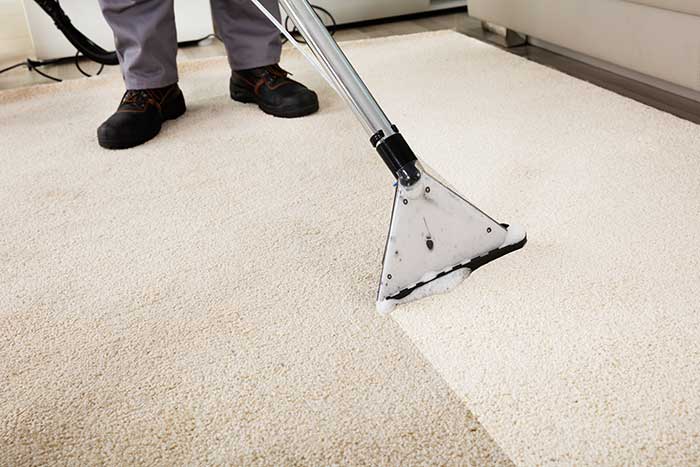
An office carpet can look darker along the route from the entrance and lighter near a wall that receives a lot of daylight. At the desks, chair wheels may change the appearance of the pile even where there has been no spill. Record where the marks are, what is known about their cause and whether they change under different lighting or as the surface dries. That information helps separate routine vacuuming from an enquiry about periodic treatment or a repair that needs the building manager.
Identify fitted carpet, carpet tiles and any loose floor coverings. If a patch has been replaced, note whether it matches the rest of the floor and whether the join is sound. Show any loose edge, floor socket or cable cover that affects access. Agree which chairs, bins and other items can be moved, and which need the owner's permission before they are touched. Where care instructions are available, have them ready so the surface can be discussed with the right information.
When considering commercial carpet cleaning, give the provider the next booking or shift time as well as the window for the work. A meeting room may be vacant on paper but needed for people to reach another part of the office. If furniture has to be moved, discuss where it can stand while the room is unavailable and who is responsible for putting it back. A specific plan for access and reinstatement is particularly helpful when the premises have very little spare space.
Keep client paperwork and equipment in the right place
The clearest instruction at a desk is one the cleaner can apply without deciding what a document contains. Identify which desks can be cleaned when empty, which can be worked around when occupied and which are outside the routine scope unless a member of staff releases them. Let staff know where to put items that would otherwise prevent a surface from being reached. A shared drawer for equipment and a secure place for current work can make a clearance rule easier to follow.
Make separate decisions about computer accessories and frequently handled equipment. A business might ask users to look after their own headsets but want an agreed routine around a shared meeting console. If there is specialist equipment, identify who is responsible for its care and where instructions are kept. It helps to distinguish an accessible table surface from devices mounted to it, and movable chairs from storage that must stay in position. Clear language prevents the same desk from being handled differently on different days.
If a desk remains unavailable because a project is in progress, give the exception an end date or a point at which the site contact can review it. A paper-intensive job may only need a few days of protection. The rest of the room may still be available. Once the work is finished, confirm which surfaces have been returned to the routine list. If several people share the desk, tell them how to hand it back at the end of a booking and who can answer questions about items left there.
Agree who checks washrooms and who manages the stock
For a small Coulsdon office, a visitor washroom may be separate from the staff facilities or may be the same room everyone uses. Find out when demand is heaviest and which room the first client will be shown to. A cleaning checklist is only part of what keeps the room ready. Someone also needs to notice stock running low, understand which refill is needed and know who handles a damaged or faulty fitting. Decide how those responsibilities are reported before adding them to a single list of tasks.
Record which products match the fittings in the building and where spare stock is kept. If the cupboard is in a common area, ask who can open it at the time of the visit. If the building manager buys supplies and the tenant replaces them, write down when a new order should be requested and how to pass that message on. A dispenser that appears empty may be jammed or loaded incorrectly. Provide a separate route for maintenance concerns so that a recurrent fault can be investigated.
Discuss additional requirements through the established washroom services information where it is relevant to your brief. For a shared room, confirm who decides whether the scope changes. If more tenants start using the same facilities, note any change in the times supplies run low or cleaning issues are reported. Check what changes after the busiest period so you can decide whether the existing schedule still fits. A few precise observations are more useful than a general description of the whole room.
Fit kitchen work around the last person to use it
An office kitchen that is empty at four can become busy again as employees finish a late call and make a final cup of tea. Before deciding when it should be cleaned, ask when people are usually done and what they leave on the counter. The person arranging the service may only see the room at lunchtime. Staff who work later can explain which surfaces become available and when bins are most likely to be full. Observe the room during an ordinary week and use that information to agree a realistic window.
Write down what staff are expected to put away. Agree whether mugs, containers and food need to be removed before the visit. If the refrigerator is shared, identify who can arrange for it to be cleared if internal cleaning is needed. Discuss appliance care separately, including whether a supplier or a designated employee handles parts of a coffee machine. Someone following the brief should understand which external surfaces can be cleaned and which jobs require an instruction from the person responsible for the equipment.
Check the route to the waste point as well as the bin inside the kitchen. A narrow passage may have to stay clear during a delivery, or the waste store may be locked at the time the office is free. Record who can open it, what containers are assigned to the tenant and whom to notify if the agreed bin is full. If a change would affect several tenants, give the managing agent a chance to confirm how the route is intended to work. A bin arrangement is only practical if it works throughout the visit.
Handle shared stairs and upper-floor access as their own part of the brief
If the workplace is above another occupier, the stair may be used by people who never enter the office. Ask who looks after the lower entrance, each landing and the handrail. A tenancy line may run across a landing that looks like a single space. Mark the boundary clearly, especially if several people use different names for the same set of steps. Keep a short note of the areas already covered so the quote can focus on the work the office actually needs.
Consider what can be carried upstairs and where it can be put down. If a lift is available only during staffed hours, an evening schedule may involve a different route for equipment. Tell the provider about door widths, steep sections and cupboards that are used for other purposes. Confirm whether anyone can give access to a storage area and whether an alternative is needed if it is full. These details can matter even on a small floor, where moving around one obstacle may change the order of work.
When a stair is the only practical way in, discuss how staff and visitors will be able to pass while work is taking place. Identify the busiest movements between floors and agree who can communicate any temporary arrangements. If a damaged nosing, loose floor covering or failed light is found, give the building contact a clear description of its location. Keep reports about repairs with the building manager while tracking the agreed cleaning tasks in the office brief. This makes the review fair to both teams.
Plan the transition into a new or rearranged office
An office move often leaves a room in use and another filled with furniture waiting to be placed. Before the routine service starts, note which areas will be occupied on day one, which remain unavailable and when people expect the rest of the space to open. If an initial clean is being considered, show any work that would sit outside the recurring schedule. The facilities contact and provider can then discuss the first visit and the ongoing routine separately.
Use the move as an opportunity to update room labels. A small meeting room might now be a private workspace and the area formerly described as the filing room may have been opened up to create a kitchen. A floor plan that still uses the old names is likely to cause confusion, particularly if someone is trying to report a missed surface or locate a cupboard. Name the relevant contact by role and explain how they can confirm that a room has been handed over after furniture arrives.
For a team with sites in Coulsdon and Carshalton, maintain one checklist format and separate site records. Put an address, revision date and contact on each version. Staff can recognise the structure while still seeing which room release times and routes are specific to their site. The London office cleaning overview is a starting point for wider coverage. A dated local handover provides the detail needed when the service begins or the office changes again.
Use feedback that identifies a room, a time and a surface
A useful service review can begin with just three observations. Pick a visible visitor area, an area that is difficult to release and a room with a known demand peak. Inspect each at the time its condition matters. For example, check the entrance just before the first visitor arrives, a meeting room before its next booking and a kitchen after the last regular break. This shows how the service fits the business rather than only how the rooms look when the visit ends.
When you record a problem, name the exact place and the time. A report that grit was visible under the chairs nearest the entrance before opening is more actionable than a general comment about reception. If a picture is needed, keep private papers, people and screens outside the frame. Ask whether the agreed work could be done when the room was scheduled and whether someone used it in the meantime. Decide what should be revisited rather than adding a blanket request to spend more time on every area.
Keep the report separate from the decision to change the schedule. A single exception may be worth noting without altering the work. A recurring issue at the same time can show that a room is released too late or that another task belongs earlier in the visit. Agree who will check the result after any change and what they expect to see. If a task is consistently prevented by furniture, a key or staff use, explain that dependency in the specification so the same issue can be prevented on future visits.
Put together a Coulsdon quote request that is easy to compare
Include the full site address, the floors or suites in scope and the work hours that affect access. State the typical staff numbers and when visitors use the premises. Explain the number of washrooms, the arrangement of shared parts and the principal types of flooring. If the building uses a different entrance outside office hours, say how people identify that route and who can grant access. If there is a loading or equipment route, describe it separately from the way a visitor arrives.
Ask the provider to distinguish the routine work from any occasional jobs that interest you. For example, you might want to discuss a more detailed visit for one meeting room and a separate routine that covers offices, washrooms and the staff kitchen. If you are comparing different frequencies, ask for the same core list of rooms to be used in each option. Clarify which tasks depend on staff clearing surfaces or the managing agent making shared areas available. A quote is easier to compare when those assumptions are written down.
If available, share a marked drawing or arrange a walkthrough with someone who knows how the building is used. Show the areas most important to the business as well as those that are hard to reach. If the room is being changed or a department is moving, give the expected dates. Use the London office cleaning service for general coverage information and bring the site-specific details to the quote conversation.
Agree what will be reviewed once the routine is in place. One office may want to confirm that the first appointment room is ready, while another may be more concerned with a washroom that is heavily used on certain days. Give the review an owner and a date, and ask that any agreed change is added to the service record. When another person takes responsibility later, they will have a usable description of the work and the reasons behind its timing.
Consider a small induction note for staff as well. Explain what they should clear, who receives concerns and where to leave items that would otherwise block access. Update the note when the use of the office changes. Staff do not need a copy of every task, but they do need to understand the parts of the arrangement that depend on them. This helps the day to run smoothly when staff, visitors and cleaners are using the same small space at different times.

Frequently asked questions about office cleaners in Coulsdon
Can you discuss cleaning a Coulsdon office above another business?
Yes. Describe the tenant entrance, shared staircase and the parts of the building already covered by a landlord. Say who can grant access and when the upstairs space is usually free.
What if our first staff arrive before reception opens?
Give both times and explain what needs to be ready at each point. Discuss who can release rooms in advance and whether the visit can be sequenced around those priorities.
Can the cleaning schedule reflect busy hybrid-working days?
Share the actual occupancy and room use across an ordinary week. Explain which spaces get busier and which tasks should still take place regardless of how many staff are present.
What details help when discussing a marked carpet?
Show the location of the mark and say whether it follows a walking route, chair wheels or a known spill. Mention lifting edges, furniture and any care guidance available.
Who handles supplies in a washroom shared with another tenant?
Ask the managing agent what is covered. Confirm who holds stock, who replaces refills and where to report a faulty dispenser or another issue that needs maintenance.
Can we leave files on desks that are still in use?
Agree how the cleaner should treat an occupied desk and which exposed areas can be reached. Identify any documents or equipment that must remain undisturbed and tell staff how to release a desk when ready.
Can the schedule change while we move into a new suite?
Discuss the dates and the rooms that will be available at each stage. Explain whether there is any initial work to consider separately, and agree when to review the recurring schedule.
How can we compare Coulsdon with a second location?
Keep a separate address, room list, access description and priority list for each site. Using the same headings helps you compare proposed work and makes site instructions easier to find.
Request an office cleaning quote for Coulsdon
Tell Complete Clean Management how your office is used, which rooms you would like covered and when each part of the building is available. Include any shared access or landlord arrangements that affect the work.
Clients we service
Organisations featured across Complete Clean Management’s client portfolio.
















GOOGLE CUSTOMER REVIEWS
What our customers say on Google
Selected review excerpts from Complete Clean Management’s London Google listing.
★★★★★
“Really happy with the deep clean! The team were friendly, professional and did a fantastic job.”
★★★★★
“We engaged with Complete Clean Management and they came in and did an absolutely fantastic job.”
★★★★★
“We have recently started to use Complete Clean Management for various cleaning services to our domestic and commercial renovation projects.”
★★★★★
“The team is punctual, professional, and pays great attention to detail.”
★★★★★
“We’ve been using this office cleaning service for several months, and it’s been outstanding.”
★★★★★
“Complete Clean Management has transformed the cleanliness of our workspace.”
Selected excerpts, checked 6 November 2026. Leave a Google review ↗