
Complete Clean Management · West London
Office Cleaners Hillingdon
Professional office cleaning tailored to your premises, working hours and priorities.
Request a free quote Call 0203 092 2297


Describe the Hillingdon address, not just the borough
Hillingdon is both the name of a London borough and the name people use for the neighbourhood around Hillingdon Village, Uxbridge Road and Long Lane. For a cleaning enquiry, the full address is much more useful than the area name alone. Give Complete Clean Management the unit or floor and the entrance available at the time you want the work done. Explain which rooms you control, whether staff use another door and which shared spaces are already managed by the building. That gives us a practical starting point for a quote for your office.
Decide what you want the cleaner to leave ready. The answer may be a clear room for early meetings, a staff kitchen available after the last person leaves or attention to the floor near an entrance that picks up grit. If you are reviewing an existing arrangement, share the part of it that works well and the issue you want to change. A useful example names a room and a time. That makes it possible to discuss whether the concern is related to the tasks, the access window or the way the office is prepared.
Our office cleaners London page describes the wider service. This guide concentrates on preparing a site brief for a Hillingdon office and setting up a review that can be repeated. You can use it to identify what belongs to the office, what needs the building contact and what requires a separate assessment before it can be priced.
Put the building owner’s responsibilities next to your room list
Start with a list of the places a cleaner needs to enter, including the route to supplies and waste. A tenant office may rely on a common entrance and stairs, but have no authority to commission work there. Ask the landlord or property manager what is already covered and where the tenant’s responsibility begins. Show that boundary on the walk-through. It could be the office door or a change in flooring rather than a line that is obvious on the lease plan. If a shared area needs additional work, list it separately until the person responsible confirms permission.
Ask what the cleaner should do if they notice an issue on the common route. A raised floor strip, loose mat or door that will not close should have a route to the building contact. Give the exact location and describe what is happening. A short note helps the manager distinguish a repair from a missed cleaning task. If a problem affects access to the office, identify who can confirm another authorised route and when the usual one will return. This is useful where a site has different people for building maintenance and the office schedule.
Apply the same approach to facilities that are shared only at certain times. A neighbouring tenant might use a corridor or toilet after the main business has closed. Give the provider the hours for the parts the office can control. Access to a route and responsibility for cleaning it are different questions. Resolve both before comparing quotes. That makes the proposed work easier to assess and keeps the office from commissioning the same task as the building manager.

Set opening checks at the places people actually use
An office near Long Lane might have two routes in, with a public door and an entrance staff use from a parking area. Check where people walk before the first working session starts. The desk nearest the door, a turning point on the floor and the room used for the first meeting can tell you more than the condition of a little-used corner. Write down two or three results the office can inspect. Give each one a place and a time. Then tell the provider which surfaces staff can make available for the work.
Consider how different users see the same room. A visitor sitting beside reception may see the underside of a table and the floor beneath chairs. A staff member standing at a counter may notice exposed surfaces and the door handle. Agree which tasks you want covered at each visit and which belong to a less frequent check. If a surface holds equipment, records or client items, staff should clear or protect it before the cleaner arrives. The schedule can then identify what should be done in the areas that can be reached.
When you compare the result, look at the same position before normal use. A mark that appears after people have arrived may help identify the source of soil, but it does not tell you what condition the cleaner left. Use those observations separately. If a room is already occupied when work is due, agree an alternative task and note when the room can be reached. A clear check works best when it takes account of both the visit and the way staff use the office.
Check the cleaning route when the office is closed
Show us the entrance a cleaner can use before or after normal working hours. A door that is open while the office is staffed may close when another occupier leaves, even though your own staff can use a different exit. Confirm which route is authorised and who can meet someone at the first visit. Tell the provider about stairs, lifts and shared doors. Give any sensitive details through a private agreed handover. A useful access note says where someone should arrive and who can answer questions without exposing credentials in a quote form.
Walk to the storage and waste points during the proposed period. A cupboard may be available inside the suite, while a separate bin store needs permission from another party. If equipment must be brought in each time, show where it can be set down safely and what needs to stay clear. For a periodic visit, confirm whether larger equipment can take the same route. If the available time is short, discuss the number of trips between rooms and where the cleaner can start while another area remains in use.
Choose a backup contact who can confirm access if the usual person is away. Agree what the cleaner should record if a lock or shared door changes without notice. A report naming the door and affected work can help the office decide whether a new slot is needed. Keep the current instructions where the site team can find them and tell the provider when an arrangement changes. The handover is part of making the schedule repeatable, especially when several people manage different parts of the building.
Plan desk care around the materials that stay in the room
An office may use desks for several kinds of work. A shared desk might need to be ready for the next person, while a project table holds drawings and samples between sessions. Ask staff what they can clear before the visit. Mark the exposed worktops and floor areas the cleaner can reach once that happens. Tell us if people need to leave a device or work item in place. Agree who looks after equipment such as screens, headsets and fixed controls. A routine can cover the accessible surface without making the cleaner responsible for deciding what may be moved.
Look at the floor as well as the tops. Cables, bags and storage boxes can block the same part of the floor for several days. If they can be stored elsewhere, agree who moves them and when. If a floor section cannot be reached, ask the cleaner to note the position and reason. The office can use that information to change the layout or agree an occasional slot rather than requesting more time for a job that still cannot be done. Staff preparation often makes the difference between an item on a checklist and a task that is actually possible.
A meeting room may be available at a different time from the desks. Give the provider its latest booking time and who clears records or equipment. If an appointment overruns, decide whether to work elsewhere or come back later. Avoid asking the cleaner to determine whether a private meeting is finished. A site contact can give the room name and time it becomes free. That keeps the preparation, access and cleaning responsibilities clear.
Make stock and maintenance visible in the washroom brief
Find out which toilets are used by your team and which are open to visitors or other tenants. A washroom next to the office may be controlled by the building rather than your business. Check what is already arranged and who can approve additional work. For the room you control, describe the fixtures, accessible surfaces and floor. Tell us which periods are busiest and whether it can close briefly while cleaning takes place. If staff use another room during that time, agree how they will know. The scope should reflect what each room needs and when it can be reached.
Show where soap, paper and other compatible stock is kept. Decide who purchases products, who refills them and who can check them before the next visit. These responsibilities can sit with different people. If a dispenser is faulty or a tap is leaking, identify who deals with repairs. Give the cleaner a simple way to report the room and fitting. A clear record makes it possible to tell a stock shortage from a fault or an agreed task that needs to be reviewed. It also gives a backup contact the information needed if the usual manager is not there.
Our washroom services page covers related provision to discuss separately. Tell us whether another supplier already deals with disposal or replenishment. Keep that detail alongside the room list and what you want included. A practical quotation can distinguish routine cleaning of a facility from the products, servicing and repairs that allow staff to keep using it between visits.
Use the transition between surfaces to set floor priorities
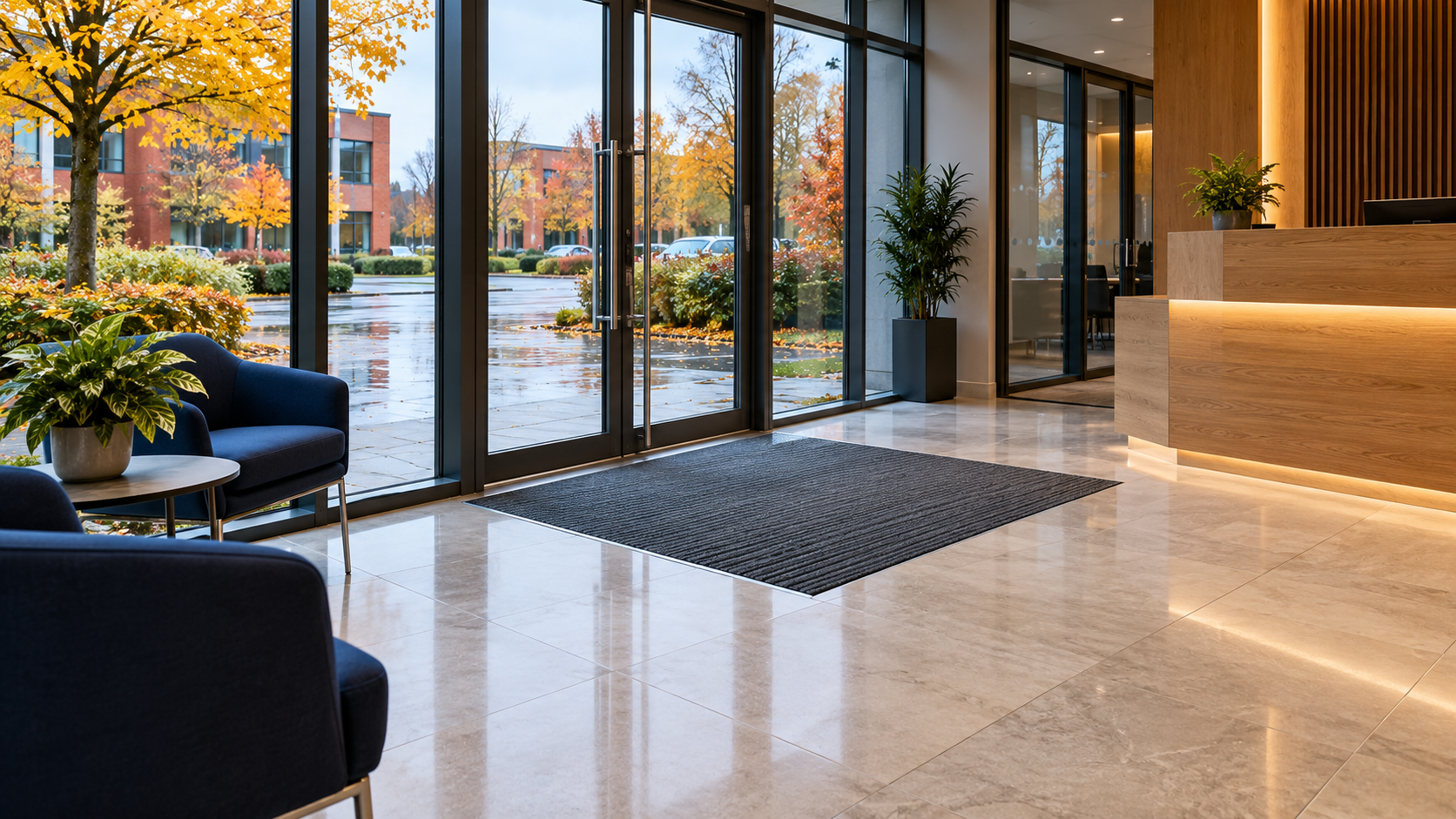
Walk through the office from the door and note where the surface changes. The entrance mat might sit on a hard floor before people turn onto carpet. A staff entrance can bring soil into the office from a different direction. Show where the dirt settles after the initial moisture dries. Identify the mat and floor surfaces that are inside your responsibility and those a landlord or another occupier maintains. Point out loose edges, worn strips and existing damage. These need to be understood before a method or regular task is agreed.
A darker path across a carpet can mean a different thing from an individual stain by a chair. Tell us whether the area has been treated and what the provider should know about the material. If a leak or damaged tile is involved, report that to the building contact. For work beyond the routine, see commercial carpet cleaning in London. Give the assessor access to the room, tell them when furniture can be moved and explain which route people still need. A quote can separate what is possible during ordinary visits from planned carpet work with a different access window.
Inspect the result using a repeatable route. Check the area at a similar time and note whether staff have already used it. If grit starts at the edge of the same mat, review the way people enter and where the mat sits. If an old mark remains visible after loose dirt is removed, discuss whether it needs a separate assessment. A precise record of the floor and timing can make it easier to decide which part of the plan should change.
Give the last kitchen user a simple handover
A staff kitchen can stay occupied long after the desks are clear. Find out who usually uses it last and ask when the sink and worktop can be made available. Agree where staff put cups, containers and food so the cleaner can reach the surfaces included in the routine. If the room is used when the cleaner arrives, decide what can be done elsewhere and who can say when the room is free. An access note can be useful even in a small office if the same conflict occurs each week.
Decide what belongs in the normal task list. An exposed worktop, sink and bin area may be available every visit. An appliance interior requires a separate arrangement and someone to clear it. Show any small items staff can move and any wires or fittings that need to stay in place. If dirt keeps building up beside a bin that cannot be pulled out, ask whether the bin can be stored differently. The site contact should be able to explain where access stops and what preparation is needed for extra work.
Follow the waste route to the approved containers and check that it is open during the visit. A shared store may need a different contact from the office. Show which containers belong to the business and which waste staff or another service handle. If the store is closed, tell the cleaner who can confirm an approved alternative. The kitchen routine includes making the surfaces available and giving the cleaner somewhere appropriate to take the waste afterwards.
Separate urgent interruptions from matters for review
Agree how the cleaner should report a room that cannot be reached and how the office should respond. A locked entrance may affect the entire visit, while a meeting room occupied at the planned time may still become available later. Name someone who can act on each type of issue. A property manager may need to authorise a different door and a receptionist may be able to confirm when a booking ends. If another task can continue while the decision is made, name it. That lets the rest of the work proceed without leaving the original problem unexplained.
Use a short note for observations that can wait. State the room, time and what prevented the work or what did not meet the agreed result. Avoid including information about the people using the room. Compare the note with the schedule. A surface that staff could not clear needs a different response from an accessible area that was missed. If the same obstacle occurs regularly, ask who can change it. A visit order or storage adjustment may be easier to test than changing every part of the routine.
Review the updated instruction against a normal day. Give the office and provider a clear way to tell whether it worked. If a change affects more than one area, record which rooms and times now apply. Keeping the agreed instruction with the scope helps a backup contact make the same decision if the issue returns. It also makes it easier to adjust one part of the work without losing the reasons for the other arrangements.
Compare supplier quotes with the same limits and expectations
When asking for a Hillingdon office cleaning quote, give each provider the same room list and timing. Show which areas you control, what the landlord covers and who prepares desks or meeting rooms. Ask the provider to state what the regular visit includes, what products are supplied and what it assumes about access. A shorter quote might omit a room or rely on a cupboard that the office cannot make available. A longer quote might include separate detail work. Read those assumptions alongside the price so you can compare the work being proposed.
Give periodic work its own line. If you want to discuss carpet care, initial preparation of a new office or a different commercial area, describe its condition and access separately. See commercial cleaning in London for a wider request. Give the extra area its own purpose and identify the work your team already handles. Ask whether a different route or slot is needed. The proposal should make it possible to see what is intended for the ordinary office schedule and what needs separate assessment.
Tell the provider who reviews the work and when. Choose one ordinary day and one busier day for checking the result. Record any important difference in occupancy, access or surfaces that were prepared. This lets the office test whether the quoted work fits the conditions it described. If a new room or visit time is needed, agree how it will be added so the specification stays current and the price remains understandable.
Prepare a planned clean without closing areas people still need
A periodic or initial clean can be easier to arrange when a room is empty, but check whether people still need to cross it or reach an adjoining office. Show how equipment can enter, which items can move and who prepares them. Give the time the area must reopen. If someone will be repairing or fitting surfaces, tell us who can confirm when the room is ready. The quotation should reflect the condition and practical preparation as well as the floor area. Give any one-off work its own list rather than assuming it fits inside the regular visit.
Agree what the person inspecting the room expects to see. List the relevant floors, glass, fittings or work surfaces. Record any damage or repairs already outstanding. If the work is connected to a lease handover, check which areas fall under your control and which the building looks after. Share any care information for a new or sensitive finish. Tell us if the area is still protected and when that protection will be removed. The provider can assess the work when the relevant parts can be seen and reached.
After the planned work, check whether the ordinary scope needs to change. The room may now have more desks or a different entrance. A cupboard could become unavailable or the route to a waste store could be altered. Update the room list and preparation instructions before the normal visits resume. Keeping one-off and regular work distinct helps the office inspect each result at the right point and recognise what still needs attention during an ordinary week.

Keep the Hillingdon address clear across a group of sites
A business overseeing several offices can compare their quotes in one place while keeping the working instructions at each address. Record the entrance, authorised hours, room list and local contact for every office. A site near Long Lane may use shared stairs, while an office elsewhere may have its own entry and waste arrangements. The same person can check whether both offices are ready at opening. Their visit windows and staff preparation may still differ. Ask the local contacts to confirm the practical details before the quote is agreed.
See our Hayes office cleaning guide and the Uxbridge office cleaning page for nearby locations. Our London office cleaning guide lists other areas. Tell us which address can be assessed first and whether any site needs a different start date. If part of a building is not yet available, identify the person who can confirm it. The office can then review the proposed work together while keeping access and responsibilities attached to the correct property.
For this Hillingdon address, give the suite, its hours and the rooms you want assessed. Describe the result you need before the first staff or visitor arrives, and identify anything the building manager still needs to agree. We can discuss the tasks, access and any periodic work separately. A short brief with an example working day will give the person showing the premises a clear starting point.
Frequently asked questions about office cleaners in Hillingdon
What details help for a Hillingdon office near Long Lane?
Give the full address, suite or floor and authorised entrance. Tell us when it is available and which rooms the office controls. Include the first room that needs to be ready and any shared area already covered by the building.
Does this page cover Hillingdon Village as distinct from the whole borough?
The guide focuses on the Hillingdon neighbourhood and nearby addresses around Long Lane and Uxbridge Road. Give us the full site address so we can discuss the premises and its access. For other places, check the linked London location guide.
How do we include work if a landlord already covers the stair?
Identify where your tenancy starts and ask the building contact what is already arranged. Show the route the cleaner needs to use to reach your rooms. Keep any additional work on the common stair separate until the responsible party agrees it.
What if the office has two entrances?
Tell us which doors staff and visitors use and which one the cleaner can enter during the proposed slot. Include any permission or keyholder requirements. If a door closes unexpectedly, agree who can confirm an authorised alternative.
Can we ask for carpet care while another office stays open?
Show the carpet, available equipment route and the room’s condition. Tell us whether people still need to cross the floor and when it can be left clear. This helps assess a separate visit and who needs to prepare the area.
How can we review a new cleaning routine?
Choose a few specific opening checks and compare them at the same time on ordinary days. Record which rooms were available and whether staff prepared them. Use the observations to discuss a change to the task, route or time.
Who reports a washroom fitting that does not work?
Agree the person who manages repairs and how to tell them the exact room and fitting. Keep that separate from cleaning and refill tasks. Also identify who can bring more stock if it is needed between visits.
Can we request one proposal for Hillingdon and Hayes?
Yes. Give the two addresses, local contacts, hours and rooms separately. Tell us which site needs to be assessed first. A shared format can help you compare the work without using the same access or room instructions at both offices.
Request a Hillingdon office cleaning quote
Call 0203 092 2297 or use the quote form. Give the full address, entrance and room list. Tell us which spaces must be ready first, what the building already covers and whether you want regular or separately planned work assessed.
For wider coverage and other locations, see office cleaners London.
Clients we service
Organisations featured across Complete Clean Management’s client portfolio.
















GOOGLE CUSTOMER REVIEWS
What our customers say on Google
Selected review excerpts from Complete Clean Management’s London Google listing.
★★★★★
“Really happy with the deep clean! The team were friendly, professional and did a fantastic job.”
★★★★★
“We engaged with Complete Clean Management and they came in and did an absolutely fantastic job.”
★★★★★
“We have recently started to use Complete Clean Management for various cleaning services to our domestic and commercial renovation projects.”
★★★★★
“The team is punctual, professional, and pays great attention to detail.”
★★★★★
“We’ve been using this office cleaning service for several months, and it’s been outstanding.”
★★★★★
“Complete Clean Management has transformed the cleanliness of our workspace.”
Selected excerpts, checked 6 November 2026. Leave a Google review ↗