Complete Clean Management · South East London
Office Cleaners Ladywell
Professional office cleaning tailored to your premises, working hours and priorities.
Request a free quote Call 0203 092 2297

Office cleaning for the working spaces around Ladywell Road
Start an enquiry with the building people actually use. A Ladywell workplace may have a public door on the street and a quieter entrance for staff or contractors. A room in a converted property can share a hall with other occupiers. Give Complete Clean Management the full address, floor and name on the authorised door. National Rail places Ladywell station on Ladywell Road, which gives a useful reference when arranging a survey. The premises contact should add directions beyond that reference and explain where the cleaner can report on arrival.
Make the first conversation about how people use the rooms. An office with appointments may want a ready waiting area at a set time, while a small organisation working from a room near Ladywell Fields could have occasional evening meetings. Describe the ordinary rooms, entrances and facilities that are relevant to your business. If some areas have their own protocol or sit outside the office scope, name the person who can confirm the boundary. The plan should help staff see which work can take place and when.
Use the London office cleaning guide if you are preparing comparable enquiries for other addresses. Give the same basics for each and keep the local instructions separate. One premises may need more attention to the shared stair and another may need a dependable visit after its last appointment. A quotation that identifies those differences will be easier to compare and review.
Make a visitor route readable for someone who has never used it
The Lewisham Observatory’s Ladywell profile describes the area around Ladywell Fields, the Ravensbourne and nearby streets. Use known landmarks to guide a first visit, then describe the actual entrance to the office. Identify the opening door, bell, waiting area and stairs or lift that the premises authorises. A route used by a contractor may differ from the one used by people attending appointments. Ask the manager which surfaces and parts of the route are inside the cleaning brief, including any mat, handrail or sign-in surface that matters to visitors.
Walk the route at a quiet time and during an ordinary busy period. Look for points where people need to pass while a task is underway. A small landing may have space for a sign but little room to stop a trolley. An internal doorway may be the only way to an accessible facility. Decide when the work can happen and who will tell people when the route is free. If a door or lift is usually controlled by the manager, write down who can approve an alternative rather than leaving the cleaner to infer what is permitted.
Choose a short inspection route for the person who opens the office. They might check the entry mat, the accessible part of a visitor counter and the floor around waiting seats. Give the schedule those points by name. The check can help show whether the proposed visit fits the opening time and whether anyone has used the area since it was cleaned. It also gives staff a clear place to report a damaged mat or fitting.

Separate office work from any specialist room rules
A Ladywell building used for advice, appointments or other public services can have rooms that operate under different instructions. Ask who controls each room and whether it belongs in the ordinary office scope. A staff kitchen, admin desk and waiting area can be clearly listed without including a room with its own procedures. If there are specialist activities, identify the limit and use the appropriate separate specification. Keep confidential documents, controlled supplies and materials needing separate handling with the people responsible for them. Explain how the cleaner can tell when a room is available without describing who was using it.
Give the routine a set of accessible tasks. A clear desk surface, floor, waste container and door handle can be identified precisely. Make the office responsible for clearing anything that should not be handled by someone else. A small sign or agreed location can indicate when a desk is out of scope for that visit. If a task normally requires a room to be empty, agree who confirms clearance and how it is recorded. Give the cleaner a different job to do first if the room is still in use.
For wider building work, refer to our London commercial cleaning page and describe the additional areas as their own enquiry. A clearer division helps everyone compare the proposal with the work that staff can actually permit. If a room changes use, review the permissions and surface list before its next scheduled visit. The person managing the office should be able to see which scope currently applies without searching through old messages.
Choose floor tasks for the join between older and newer surfaces
A converted office can contain several finishes in a small space. A carpet tile may meet an older stair, a painted threshold or a stone step. Record what you know about the material and ask the property contact about any care restrictions. An ordinary routine can be set out for the agreed floor area while uncertain finishes are assessed separately. Report visible damage before using it as a measure of cleaning. Loose edges, worn paint and previous repairs need a clear location and a building contact. A treatment may be unsuitable if the surface has not been identified.
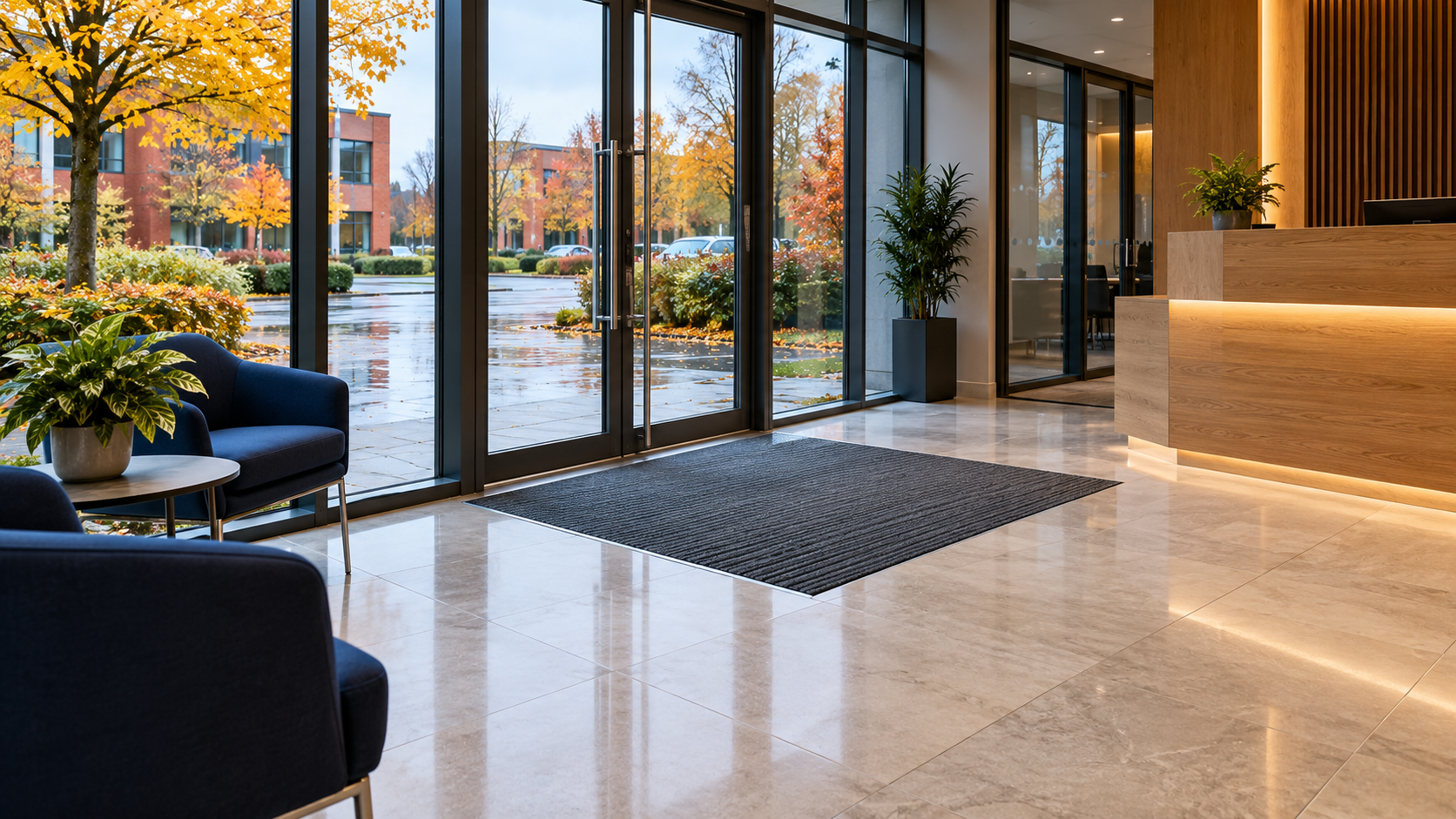
Inspect the transition where people step indoors after walking from Ladywell Road or a side approach. Check the edge of the mat and the place where people turn towards reception or the stairs. Give the cleaner a location to check and identify who owns the mat and the flooring on either side. If rain brings grit or moisture in from a rear door, inspect that route separately. A good entrance routine is easier to plan when the office knows which path causes the marking and when the floor has to be ready for the next people coming through.
For a separate commercial carpet cleaning assessment, describe the affected room, condition, likely finish and access for equipment. Explain when furniture can be moved, how long the floor can be kept clear and what happens if the entrance remains in use. Put the work on its own line when it requires preparation beyond routine vacuuming. Confirm who can reopen the room and what condition staff should check before moving furniture back.
Plan cleaning around room bookings and protected conversations
Ask the person who manages bookings for a representative week. List the rooms that need to be ready before the first visitor and any that remain in use after the rest of the office closes. Where staff are dealing with private conversations, arrange a sign or schedule that only shows whether the room is available. Do not put names or other details into the cleaning notes. If a door needs to stay shut during a session, decide when the cleaner can move on to another part of the visit. Give a reliable process for rescheduling a task that could not be done.
Set a separate plan for the short gap between bookings and the end-of-day clean. Staff might clear cups and make a table available between sessions. A scheduled visit can attend reachable surfaces and floor areas at an agreed point. A periodic job, such as a check behind a cabinet, needs enough notice for the staff contact to make that part of the room available. Record who sets out the chairs and which layouts are meant to stay. The people who open the room next should be able to tell when a deliberate setup has been left in place.
A room booking can change without altering every part of the visit. If the meeting regularly runs late, consider changing the order or agreeing another slot for that room. Use the visit record to show when the issue repeats. Avoid writing a new generic schedule until you know which room and task are affected. Give the staff contact a way to confirm the revised time and tell others who use the same space.
Set a washroom brief for staff and visiting users
A small Ladywell office can share a washroom with people arriving for different services. Ask who covers its cleaning and what access the office can agree. Include the room name, fittings and high-contact surfaces in the enquiry. Note which room is available during the work and which entrances need to stay clear. A handle on a shared corridor may sit outside the toilet itself but still matter to the people using it. Check who includes that touchpoint in the building schedule. Agree who to tell if a lock, flush or dispenser is damaged.
List the consumables and where the correct replacements are stored. A fitting may be part of an existing supply agreement, while a cleaner is only asked to check stock. Give each fitting a recognisable location and decide who receives a low-stock report. Ask the property contact how a locked unit can be accessed by authorised people. Use the washroom services overview if you want to discuss supply or provision separately. Keep those decisions distinct from the recurring work on floors and fixtures so a quote can identify who provides what.
Review stock at a useful time, such as before the first appointment or after a busy day. If a refill goes missing or a unit remains empty, find out whether stock, access or maintenance is the cause. A cleaner’s report should be specific enough to send to the right person. Record changes to the role or cupboard location in the site brief so that the next person checking the room does not work from an older arrangement.
Give the kitchenette a real clearance window
An office tea point can be in use during the same gap when people expect it to be cleaned. Identify when the room is genuinely available and who clears personal food or used crockery. Agree which surfaces are normally reachable and which need preparation. A sink surround, a small splashback and a shared table can all have different clearance conditions. If a periodic job needs an appliance emptied or a cupboard moved, ask who can prepare it and where items should go. Put that work beside its own agreed time rather than adding it to every visit by default.
Keep the routine visible to staff. A tea point shared by several rooms may be left in a different state depending on who used it last. Ask the building contact to give each user the same instruction about mugs, packaging and where to place waste. Agree what the cleaner reports if the agreed area cannot be reached. A message with the room and task is enough. Give the person managing the space a way to review whether a pattern comes from the schedule, the storage or the handover between users.
Specify a suitable place for ordinary supplies, including any replacements the office expects to be used during a visit. Make the cupboard available at the proposed time and identify the person who deals with shortages. If a tap, latch or appliance has a fault, give it a maintenance route. These small decisions let the cleaner complete the agreed work and help the opening team see when a separate issue needs follow-up.
Separate indoor bin work from collection day arrangements
Describe where waste starts and where it finishes. An indoor bin in a Ladywell tenant suite can feed a common store or a separate container the tenant pays to use. Tell the cleaner which streams are in scope and what to do when access is locked. Check that each indoor label corresponds to the correct outside container. If a cleaner is asked to empty the office bins but someone else presents them for collection, give both parties the place where the handover happens. Confirm that sacks or bins will not be left in a shared passage without the building’s approval.
See Lewisham Council’s business rubbish and recycling information when checking local collection options. Confirm the agreement for the premises and its actual storage route. If access changes on collection day, tell the cleaner who has the key and who can approve an alternative. Keep confidential records and equipment out of ordinary waste with a separate process staff understand. Give a clear destination for these items rather than relying on a note beside a general bin.
Review where waste builds up through the working week. A kitchen used for several sessions might need more attention on particular days, while a room that only handles administrative work can have a different pattern. If a bin is full at the start of each visit, find out whether the container, route or collection frequency is the issue. Use the cleaner’s record to show when it occurred. The person responsible can then decide whether the change belongs to the office routine or to the collection agreement.
Clarify the landlord boundary for stairs, glazing and entrances
A room above a shop or within a building with several occupiers can have a shared entrance whose responsibilities are easy to misunderstand. Mark the point where the office cleaning starts. It might be the inner face of the suite door or the landing beside a named room. Ask who covers the glass, outer door and mat if they are used by several groups. Give the cleaner an access-only route where that is all that has been agreed. When there is proposed extra work on a common stair, identify who has permission to authorise it and how people will get around the area during the work.
If you manage another site in Lewisham or Brockley, use the same terms to describe tenant work, building work and access only. Take a fresh look at the actual boundary at each address. A door held open in one building may be locked in the other after a visitor leaves. Check who can grant entry and who closes each side at the end. Keep the description easy to use for someone covering a shift. Credentials should remain within the building’s private handover procedure.
Give issues outside the office area a route to the appropriate person. A damaged threshold can still affect the cleaning work even if the tenant cannot arrange the repair. Tell the property contact where it is and let the cleaner know if they must take a different route while it is investigated. Update the work instructions when a new occupier or repair changes the boundary. A visible line in the schedule helps avoid uncertainty when several people use the same approach.
Decide what stays in place when an office reorganises
A move or layout change may happen in stages, with work continuing in part of the office while shelves and desks are being relocated. Identify which rooms remain occupied and when the others are released. Tell the cleaning team who is responsible for moving boxes, electrical items and furniture. If the work involves residues from trades or materials that need separate handling, give them their own brief. Check the floor condition before a new desk goes against a wall. An empty part of the room can make inspection and a planned periodic job easier, provided it can stay clear for the required time.
Update the room names and the access instructions. A shared route may be closed temporarily or an office might take over a different cupboard. Put the change on the plan and identify when it takes effect. If both old and new rooms need visits in the same week, give them separate priorities and identify when the previous scope ends. Tell the staff contact who will check the outcome before people return. Where a previously shared area is now in the office’s control, ask the property manager to confirm the boundary before pricing more work.
Give the first normal visit a practical check. Look for the areas that now have a different pattern of use, such as a newly positioned mat, a busier room or a bin moved farther from the kitchen. Agree how staff can record changes in the first week. This lets the quotation and schedule catch up with the way the space operates without relying on the same person to explain it each time.
Review the work at the time it matters to your office
Choose points that can be checked before the next main use. For a Ladywell reception, that might be the floor by the entrance and the nearest visitor seat before the first appointment. A shared staff room can be inspected after a quiet cleaning window and before people use it again. Record the time and whether anyone has already been in the room. A note about a surface that had papers on it tells you something different from a note about a missed clear surface. Use the review to see which issue the premises can act on.
Ask the person responsible for the schedule to give each finding a next step. A full container may need attention from the building contact or collector, while a missed room may need the cleaner’s visit order changed. A broken fitting needs the maintenance route. If an access problem is repeated, check who holds the key at the proposed visit time. If a mark occurs after foot traffic, follow the route before choosing an adjustment to the floor routine. Each decision can be checked again against the same place and time.
A common reporting format helps when the people responsible for the office work at different times. Record the room, condition, time and contact without adding personal details. Give the cleaner a way to report an area that could not be reached and decide when it is rescheduled. Keep the notes alongside the current scope so that changes in occupancy or room use can be acted on without losing track of why the existing schedule was chosen.
Request a Ladywell quote with the decisions you already know
Provide the full address, room list, busiest times and authorised access. Add any shared stairs, toilets or kitchen facilities you want considered. Explain which surfaces staff clear and which specialist areas remain separate. Tell Complete Clean Management whether you want occasional work assessed alongside routine visits. Include known flooring information and when a larger job can use the entrance. Identify who can confirm the landlord’s part of the building and who can describe the office’s day-to-day use. The first discussion can then address the practical limits of the premises as well as the jobs themselves.
Ask for enough detail to compare the proposal with the brief. Check that room coverage, visit frequencies and agreed preparation are visible. Look for the process if a door is closed, a surface is unavailable or a common area is excluded. Give the same information to everyone pricing the work. If you have a target for when a room has to be ready, explain it and ask how the proposed visit fits. Confirm any periodic work, stock arrangement or access assumption before treating it as part of the schedule.
Call or use the enquiry form with the two or three points you most want to solve. It could be an opening check for a Ladywell Road office, a more predictable shared washroom routine or better access for carpet care. You can add a floor plan later if one is available. Start with the room, door and time that matter most, and agree who will check the result after the work begins.

Questions about arranging office cleaning in Ladywell
What do you need for an enquiry near Ladywell station?
Send the building number, floor, authorised door and proposed access hours. The station listing locates the station on Ladywell Road, but a premises contact should explain the rest of the route. Mention any stairs, shared corridor or restricted store that changes what can be reached. Keep access credentials in the approved handover.
Can you clean the admin areas while another room has its own procedure?
Describe the rooms you want included and the exact point where the office scope ends. Ask the person who controls the other room to confirm its separate instructions. Agree a way to report a closed or restricted area without describing its use. The commercial cleaning overview can help when wider work needs its own assessment.
What should we say about older floors in a converted Ladywell office?
List the finishes as far as you know them and mention any repairs, worn edges or previous treatments. Ask the property contact for the relevant care instructions. For a separate carpet cleaning appointment, include the route for equipment and when the room can remain clear. Send condition reports to the person responsible for the floor.
How can an office prepare a waiting room before early appointments?
Agree the time it has to be ready and ask staff to clear the surfaces listed in the brief. Give the cleaner a room order that works if another appointment finishes late. Set a small check at opening, such as the accessible table, door-side floor and bin. Record the time so the manager can compare similar days.
Who should we tell if a shared washroom has missing supplies?
Confirm the role that orders stock and who has access to the fitting or cupboard. Record the room, item and time when a supply is low. Send a damaged unit to the premises or service contact. Our washroom services page can help when you need to discuss a separate supply arrangement.
What if waste from our office crosses a shared entrance?
Agree the route and timing with the building manager and show which containers the office can use. Decide who handles external presentation and how a locked store is reported. Use Lewisham’s business waste information when checking the collection arrangements and keep confidential or specialist items in their own process.
Can you discuss Ladywell and a nearby Lewisham office together?
Yes. Prepare a separate room list, entrance note and schedule for each. See the Lewisham office guide for the second address. If the offices have the same manager, use the same reporting categories while keeping the check points and permissions tied to the specific building. This makes it easier to compare results and agree changes.
How should we arrange cleaning when furniture is being moved?
Confirm who clears the room and which items need to stay in place. Tell the cleaner when the route is open and when the next users will need it. Ask about periodic or fit-out work as a separate item if it differs from the normal scope. Give the first routine visit an updated room list, floor information and stock location.
Talk through your Ladywell office cleaning brief
Describe your workrooms, access and the tasks you would like priced. For other sites, start with the London office cleaning guide.
Clients we service
Organisations featured across Complete Clean Management’s client portfolio.
















GOOGLE CUSTOMER REVIEWS
What our customers say on Google
Selected review excerpts from Complete Clean Management’s London Google listing.
★★★★★
“Really happy with the deep clean! The team were friendly, professional and did a fantastic job.”
★★★★★
“We engaged with Complete Clean Management and they came in and did an absolutely fantastic job.”
★★★★★
“We have recently started to use Complete Clean Management for various cleaning services to our domestic and commercial renovation projects.”
★★★★★
“The team is punctual, professional, and pays great attention to detail.”
★★★★★
“We’ve been using this office cleaning service for several months, and it’s been outstanding.”
★★★★★
“Complete Clean Management has transformed the cleanliness of our workspace.”
Selected excerpts, checked 6 November 2026. Leave a Google review ↗