
Complete Clean Management · North West London
Office Cleaners Willesden
Professional office cleaning tailored to your premises, working hours and priorities.
Request a free quote Call 0203 092 2297


Set a workable cleaning brief for your Willesden office
Start with the difference between a tidy room and a room your team can use without preparation. At an office near Willesden High Road or Walm Lane, that could mean having a clear counter for the first visitor, making a meeting space usable after a late booking or removing dry grit from the inside of the entrance before the team comes in. When you contact Complete Clean Management, describe the office address, the floor and the route used during a visit. Give one or two examples of the result you want. This will help us discuss a quote for the actual working area.
A Willesden property can be home to several businesses with different hours. The office you occupy may share a hall or a set of stairs with people who start much earlier or finish later. Tell us how cleaning access works when those other occupiers are still using the building. Identify what your business controls and the areas the owner or property manager already looks after. Where the position is unclear, it is useful to bring that question to the survey so it can be resolved before any new work is priced.
Our office cleaners London page provides a view of the wider service. This guide focuses on writing a clear routine for a Willesden office, including how to make the space available, spot differences between working days and decide what would be better handled as periodic work. It can also help a business that is comparing quotes after a change to its tenancy or opening hours.
Walk from the High Road entrance to the point where your lease begins
A business may use a shared street door and turn through another door before reaching its office. Walk that route with someone who knows the building. Identify which part belongs to your tenancy, where a client waits and what door a cleaner can use in the proposed window. Show the physical boundary where the routine starts. A provider cannot tell from an address alone whether the mat, stair rail and landing are all part of one agreement. Describe what is already arranged with the property manager so any gap can be assessed separately.
Where the entrance opens directly onto the office, notice where people stop and where cleaning equipment could be set down without obstructing the route. An office might have a short internal area before a set of stairs. Give the provider a chance to see how the space is used, including whether deliveries sometimes wait there. A clear path during the survey can hide a normal access problem. Point out when boxes are usually collected and who will move items if they are still in the way during a visit.
Agree what the cleaner should report outside the tenant scope. A stair with a damaged nosing, an unlocked shared door or a loose entrance mat is information the property manager may need. It does not become part of a cleaning routine simply because the cleaner sees it. Give the site contact a way to pass on a location and a short description. That keeps the cleaning brief focused while helping the tenant raise issues that affect its own access and visitors.

Create an order of work that fits a short evening slot
If your Willesden office closes late and the building locks soon afterwards, the available cleaning window may be shorter than it looks. Get the actual times from the person who closes the premises. Ask what still happens in the last half hour of the day. A member of staff might be using the kitchenette, counting stock near the office door or finishing a call in a meeting room. Discuss which part of the visit can start while those jobs finish and what should be completed before people leave the building.
A practical order puts the things that cannot wait alongside the places that are already accessible. The cleaner might start in a vacant desk area, return to the staff kitchen when it is free and finish at the door used to leave the office. Write down what happens when a room remains occupied. It can be useful to agree a substitute task or a way to raise the missed area with the site contact. That gives you a record of what was possible rather than an unexplained difference between the checklist and the condition of the room the next day.
If the building offers access early in the morning, compare it with evening access using the same priorities. Some tasks may be easier before deliveries or appointments. Other tasks may need to happen after the working day ends. Ask about the specific hours available at your address. A timetable can change when neighbouring tenants have different arrangements, so check whose permission the cleaner needs and who can answer questions if the route is temporarily closed.
Help people leave the work floor ready for cleaning
A room of desks can look orderly even when the floor underneath is blocked by bags and boxes. Ask staff which items have to stay and how they can clear an area before a visit. A rack for bags or an agreed shelf for supplies can expose places that previously stayed inaccessible. Mark any equipment or cabling that staff have to handle themselves. The cleaning scope should describe what can be reached without disconnecting anything or moving work in progress. Take particular care around desks used by more than one team, where one person may assume another has already cleared the area.
The printer and parcel point may need separate instructions. Loose paper and crumbs can gather on the counter and beneath a stand, while cartridges, returned goods and confidential material need different handling. Show the normal state of the area and explain who deals with items the cleaner should leave. Give the site contact an easy way to record a blocked surface. If a storage habit prevents cleaning in the same place repeatedly, the office can address that before asking for extra time or a different visit frequency.
When someone changes desk or a new cabinet goes in, check the route again. A chair may no longer pull out far enough to reach the corner of a room. Extra desks may increase use of door handles and the shared bins even if the floor area does not change. Review the scope against the new arrangement and record only the practical changes. That can help the cleaner and the office contact keep a useful routine without having to rewrite every line of the specification.
Plan visitor-facing work around an active counter or meeting area
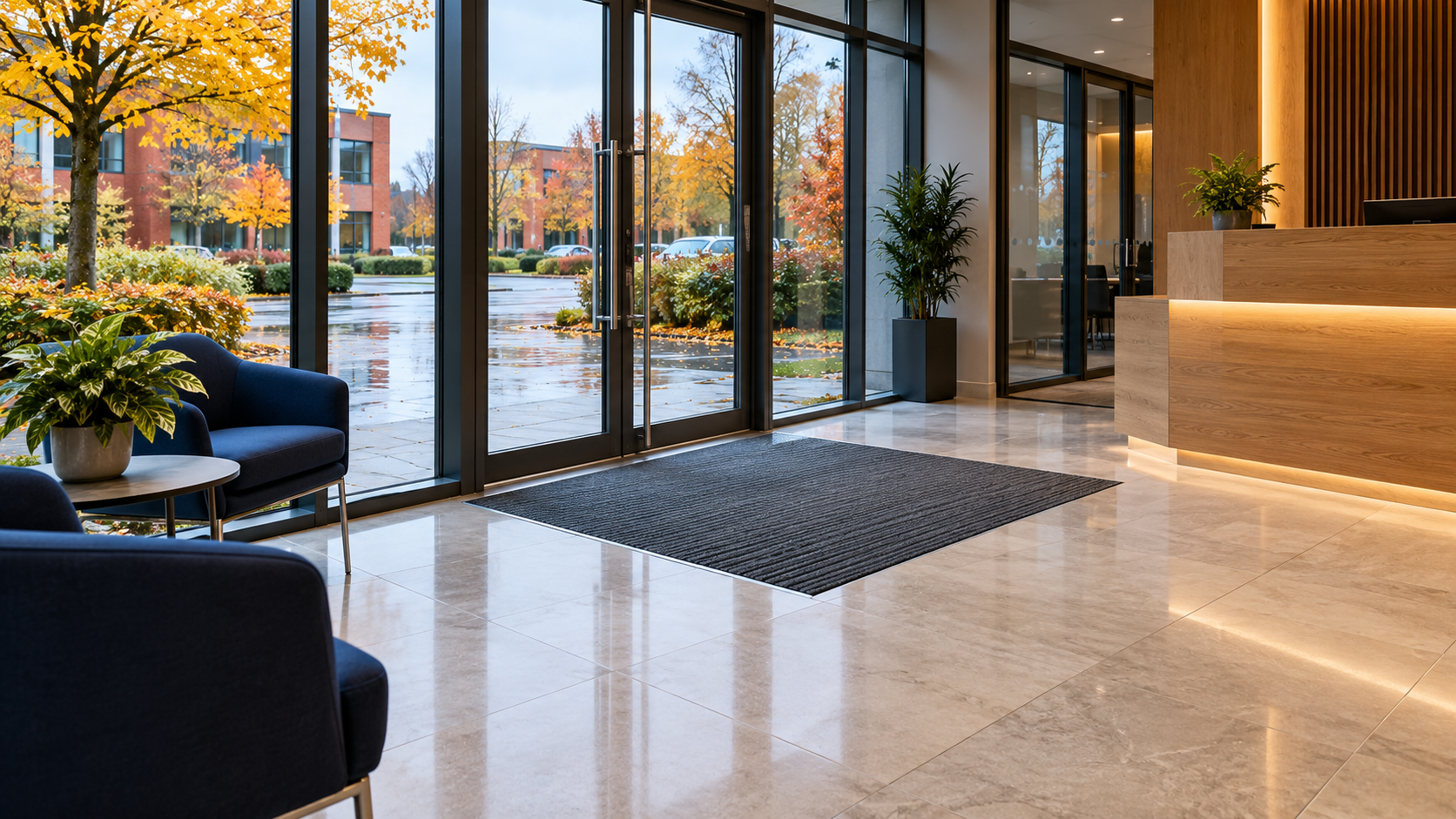
For a front office that takes walk-in enquiries, the most noticeable areas can be small. A shelf beside the door might collect fingerprints and cups. The two chairs closest to the counter may see more use than the rest of the room. Ask the people who work there where dirt collects during a normal day and when the public area is quiet. Use those details to specify the tasks and deadlines. A waiting space that is used constantly until closing can need a different visit window from a private meeting room with bookings spaced through the day.
Show the provider which side of the counter can be reached, which equipment is in place and where paperwork is stored. The office team should remove sensitive material and any items it does not want handled. Set out what the cleaner can do if the surface is clear, and what parts stay out of scope if it is still occupied. If lightweight seating can be moved, identify where it can go without blocking the visitor route. Agree how to put the room back so staff can open without another furniture reset.
Ask someone to inspect the room from the visitor’s position before the first appointment or opening. A mark under a low shelf might be visible to people who sit down and missed by someone standing behind the counter. Record one or two specific checks so you can tell whether the schedule works. If a room looks different after the public has been in for several hours, separate the morning standard from whatever can be checked or refreshed during the day.
Treat a private toilet and a communal washroom as different rooms
A washroom inside a Willesden suite can be part of the tenant’s routine, while a room on the shared landing may be managed through the building. Describe both if visitors use them, then establish who can authorise work in each. A cleaning provider needs to know which room to enter, which surfaces to cover and when the room is available. Mention any facilities people rely on during a visit. If the room cannot be closed for long, discuss how to coordinate the work with the person who manages the premises.
Give a clear instruction for supplies. Restocking an existing dispenser can require access to a cupboard and the correct product. Buying that product or arranging disposal can be a separate responsibility. Identify where stock is kept, who will respond when it is low and how a problem with a fitting is reported. If more than one business uses the facility, ask the manager whether there is a central contact for supplies. This avoids each occupier assuming someone else will refill the dispenser before the office opens.
See the washroom services page when you want to discuss replenishment or disposal as well as the regular clean. Explain what is already covered by other agreements and what you want assessed. A leak, broken lock or cracked surface should have its own route to the person responsible for maintenance. Mark its location rather than treating it as part of the same general cleaning issue. A short record makes the responsibilities easier to check when the routine changes or the usual office contact is away.
Work out where grit moves between hard floor and carpet
Near Walm Lane and the High Road, someone entering a Willesden premises may cross a mat, a hard threshold and carpet before reaching a desk or waiting chair. Walk the route at the end of a day when it has been used. Look for where people turn, where the door opens over the mat and where dry soil collects in the first carpeted area. Identify which part belongs to your office and what the property manager looks after. A visible change in finish can help define where one provider’s responsibility ends and another begins.
Show worn, loose or marked areas to the person assessing the floor. Tell them if the marks return from the same source or if the flooring has been cleaned recently. A wet patch linked to a leak needs the building contact, and a loose strip should be recorded for repair. A carpet spot, worn lane and ordinary dry soil may call for different conversations. Explain whether there is a care instruction from the landlord or supplier and identify any movable mat or rug separately from the fitted floor.
For work beyond routine vacuuming, consult the commercial carpet cleaning London page. Explain how the room can be cleared and who is responsible for moving suitable furniture. If another room is only reachable across that floor, say when the route will be needed again. Keep any planned periodic work separate in the quote so you can compare its cost and practical requirements with the everyday routine. That makes it easier to see what needs a different slot and what can be done on a regular visit.
Keep office waste separate from goods and packaging
A Willesden office attached to a shop or other commercial operation can have a bin for ordinary office waste and a separate flow for deliveries, packaging or stock. Walk from the point where waste is produced to the approved store. Identify which containers the cleaner can use, where they are and when access is allowed. A staff member may put down a crate in a place that looks like a collection point, even though it contains something that belongs elsewhere. Explain what the cleaner should leave for the team to handle and how to report an obstruction.
The staff kitchen can create its own problem if it is close to the delivery route. A box placed beside the sink can prevent access to the worktop or bin. Ask the people receiving goods where items can wait. Then agree which kitchen surfaces should be clear before a visit, who deals with personal items and what the cleaner can do if staff are still taking a break. For periodic work inside an appliance, arrange a date when the right person can empty it and make it available.
Record changes to the waste route before they affect the visit. If the outer store is locked earlier than usual, a tenant should agree another approved arrangement with the building contact. Do not expect someone to leave a bag in a corridor because there is no instruction for it. A defined route and responsibility will help keep the office routine clear even if another part of the business is having an unusually busy week or changing the way it handles deliveries.
Build in a straightforward way to report missed areas
A useful report names a room, a task and a reason when work could not be done. If the cleaner could not enter a meeting room because a client was still there, say that. If a blocked worktop had personal belongings on it, note that the exposed part was dealt with if that is what happened. A clear record allows the site contact to ask staff to prepare the room or to reconsider the visit time. It is more helpful than an overall rating that leaves the business trying to work out where the routine failed.
Make sure the person receiving the report can act on it. An office manager may be able to adjust a booking, while only the property manager can authorise use of a shared entrance. Decide whom the cleaner should contact about each type of problem. Share sensitive access arrangements through the agreed private route. For something urgent, identify the person who can confirm the next step rather than leaving it for a later review. For a smaller recurring issue, agree where to record it so you can look at patterns across the week.
Check whether a change actually helps. If the cleaner starts with the back room because the front is usually occupied, review what the front room looks like at opening. If a small storage change makes a corridor reachable, see whether it remains clear when deliveries are busy. Keep notes tied to particular rooms and times. That can help both parties adjust the tasks without revisiting every part of the agreement whenever one room becomes harder to reach.
Compare quotes for the office and any connected business areas
When asking for prices, show the same rooms and task list to each supplier. Identify the areas used by office staff, the places customers enter and any parts of the building where other activities take place. Specify which rooms need work at every visit and which can be rotated or priced separately. A small private office behind a larger operation might share a staff kitchen and entrance but have a completely different floor use. The quote should reflect where you want a cleaning service and what access is actually possible.
If the request includes a separate commercial area, consult commercial cleaning in London and describe what goes on there. Give details about surfaces, occupants and any operations that affect when cleaning can happen. Ask for the extra area to be identified in the quote so you can compare it independently. Record whether supplies are included, whether there is suitable storage and what your staff need to prepare. Differences in these assumptions can explain why two proposed visits take different amounts of time.
Ask how the agreement would respond to a change. A new desk area, longer opening hours or an extra shared space might alter the work. If a regular visit is working for the existing office, decide what you want to keep and what needs to be discussed. Set a review point with a few clear checks. A quote becomes more useful when you can see how it turns into an ordinary working visit and how you can evaluate the result afterwards.
Prepare for a clean when a unit is vacated or refitted
If a Willesden office is being returned to the landlord or prepared for another team, explain which parts of the space will be clear and when. A room may appear empty on a plan while furniture, unwanted materials or equipment still sit against the walls. Ask who will remove those items and who will confirm access. Give the condition of the floor and fittings, and say whether anyone else still needs to be on site. The provider can then discuss what initial or handover work would need to be assessed.
Write a short handover checklist with the person who will inspect the premises. Specify whether it includes internal glass, floors, accessible shelves or any shared space the tenant is responsible for. Tell us about surfaces awaiting repair and items that need to be left for the building. If trades are still working, agree the sequence so cleaning can happen when the relevant room is available. A separate schedule for the initial work makes it possible to see what the regular service will need once people are back in the office.
When the area is in use again, update the scope with the new room layout and the current access arrangements. A change to the front desk can create a different visitor route, and a new bin location can change how waste is moved. Show the finished setup before fixing the ongoing visit order. If the same change is happening across several units, handle each on its own dates and keep the shared building arrangements clear. That helps the office continue operating while other areas are being prepared.

Compare neighbouring offices by use and access
If you look after an office in Willesden and another nearby, list them separately even if one manager reviews the cleaning at both. Give each address its own opening time, entry route and room priorities. One might have a public counter and the other might be empty until mid-morning. Agree the same way to report a missed task if that helps the person overseeing the sites, but keep the practical instructions local. This can prevent a change agreed for one property from creating confusion in another.
Our guides to office cleaners Dollis Hill and office cleaners Harlesden cover nearby areas. Use the London office cleaning page to view the wider coverage. If you want to discuss several locations, mention whether each has its own keyholder and whether the building manager still needs to confirm anything. Ask which address should be assessed first and give the relevant times for a visit. The scope can then reflect how each office operates.
For the Willesden premises, include the location, opening hours, rooms and a short example of what is difficult to cover. Share your priorities in order if the visit window is tight. We can discuss how to assess the office and what might belong in a separate quotation. If the current arrangement is still in place, identify what already works well. That gives the conversation a useful starting point and helps keep the requested work focused on your actual needs.
Frequently asked questions about office cleaners in Willesden
What should we tell you about an office near Walm Lane?
Send the full address, floor or suite, the door available to the cleaner and the rooms you control. Say whether you share a staircase, washroom or waste store. Include the time you need the first visitor or staff area ready.
Can the cleaner work after our front counter closes?
Explain when the final customer leaves, what staff still need to finish and which door can be used after close. If the building locks soon afterwards, mention that time. Discuss which rooms can be covered first and where a visit can end.
How do we include the office behind another business area?
Describe the rooms you use as offices and the route people take from the other area. List any commercial or public space separately. Confirm who handles equipment, stock and materials the cleaner should leave, and what can be reached safely during a visit.
Who should deal with a damaged mat in the High Road entrance?
Check whether the mat is inside your tenancy or part of the building entrance. Tell the person responsible for the mat what has happened and where it sits. The cleaning scope can make clear what normal care is agreed and who handles repairs or replacement.
What if shared supplies keep running out before the next visit?
Find out who provides the stock, who refills it and who can respond during the day. Check whether the dispenser needs a particular product. A report that identifies the room and item is easier to act on than a general note about washrooms.
Can we get a separate quote for a vacated Willesden office?
Yes. Tell us when the room is empty, what furniture or material will remain and when the landlord or new occupier needs it. Explain any ongoing work, repairs or access limits so the tasks can be assessed independently of the routine.
What if the office kitchen is still in use when the cleaner arrives?
Agree which area can be worked on first and who can confirm when the kitchen is free. Staff should clear personal items from the agreed surfaces. If there is no time to return, decide how the office contact will record the task and review the timing.
How can we compare our Willesden and Dollis Hill quotes?
Give each office its own rooms, access window and priorities. Ask providers to list regular work, supplies and periodic options separately. You can compare what each quote covers without assuming both offices need the same visit length.
Request an office cleaning quote in Willesden
Call 0203 092 2297 or use the online quote form. Give the full office address, the entrance that will be available and the rooms you want covered. If you share a door, staff kitchen or waste route, mention who can confirm access. Tell us what your team needs ready first and what you want considered separately.
For the wider service and nearby guides, see office cleaners London.
Clients we service
Organisations featured across Complete Clean Management’s client portfolio.
















GOOGLE CUSTOMER REVIEWS
What our customers say on Google
Selected review excerpts from Complete Clean Management’s London Google listing.
★★★★★
“Really happy with the deep clean! The team were friendly, professional and did a fantastic job.”
★★★★★
“We engaged with Complete Clean Management and they came in and did an absolutely fantastic job.”
★★★★★
“We have recently started to use Complete Clean Management for various cleaning services to our domestic and commercial renovation projects.”
★★★★★
“The team is punctual, professional, and pays great attention to detail.”
★★★★★
“We’ve been using this office cleaning service for several months, and it’s been outstanding.”
★★★★★
“Complete Clean Management has transformed the cleanliness of our workspace.”
Selected excerpts, checked 6 November 2026. Leave a Google review ↗