Complete Clean Management · South London
Office Cleaners Chessington
Professional office cleaning tailored to your premises, working hours and priorities.
Request a free quote Call 0203 092 2297

Office cleaning for Chessington workplaces with more than one operating rhythm
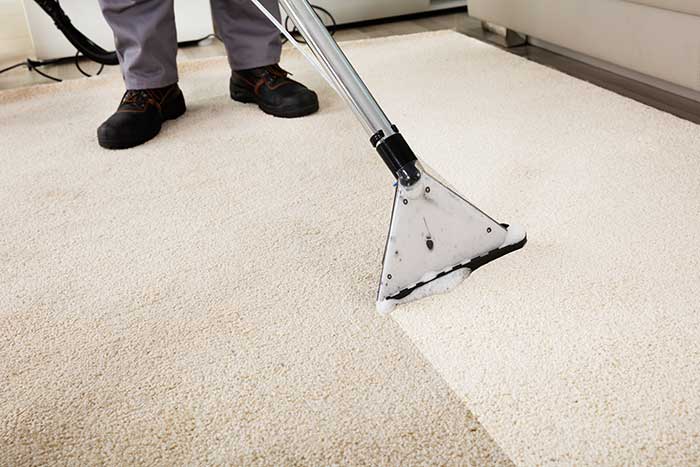
An office inside a business unit in Chessington can be busy at both ends of the day for entirely different reasons. At opening, a dispatch team may collect paperwork and keys. Later, customers or visiting suppliers may come through a reception that shares the same entrance. A supervisor can still need the office after the last vehicle has left. If you are putting together a cleaning brief, describe the rhythm of the people using the building as well as the layout. This helps establish where there is a practical window for the work and which rooms must be ready before anyone arrives.
The best starting point is to name each area by its function. A small administration room, a staff welfare block, a product showroom and a delivery desk can occupy similar amounts of floor space while needing very different tasks. Record which areas the office team controls and where another contractor or a landlord already has responsibility. Make a note of any door between the office and an operational area that cannot be used without the site contact. An address and a desk count rarely explain those boundaries.
Complete Clean Management can discuss your office cleaning requirements and help define what to include in a quote. If you look after more than one location, our London office cleaning page gives an overview you can share with colleagues. For the Chessington premises, put the immediate problems in order of importance. If the dispatch room needs to be ready before the first shift and the customer area needs attention before opening, the two deadlines may have more influence on the plan than their relative size.
Draw a clear line between the office and operational space
A wall and a door do not always define the working boundary. Staff may use an office corridor to reach lockers, or warehouse staff may collect documents from a shelf in a reception area. Walk the places where those routes cross. Identify the walking surfaces, doors, counters and handles that are inside the proposed office cleaning scope. If a room needs a special induction or escort, record it separately and explain who can grant access. That allows the provider to discuss the scope without assuming that a brief for the office applies to the whole unit.
Pay particular attention to any space that changes use between shifts. A table used for office paperwork in the morning could become a temporary packing surface later. A store that usually holds stationery may contain returns awaiting inspection after a delivery. Document how to identify a surface that has been released for cleaning. If an item needs to remain in place for an operational reason, identify it by its location or the name of the station. A cleaner should not have to decide whether a parcel or stack of papers is important enough to leave untouched.
Check with whoever runs the operation before proposing an access time. A shift may finish at a stated hour while final vehicle movements, equipment checks or stocktaking continue. Explain whether those activities affect movement into the office. Discuss requirements outside the office separately through the commercial cleaning service for London if that is relevant to your enquiry. The result should be a scope that everyone involved can recognise on the ground.

Use the shift handover to define priorities
The period between two shifts can seem like the obvious time to clean a staff room. It can also be the point at which the greatest number of people are trying to use it. Ask team leads where people spend that overlap. One shift might gather near a noticeboard, while the next queues for lockers and uses the same tea station. Observe when the overlap ends and whether there is a better opportunity earlier or later. Where the workforce includes several teams, ask for the actual break pattern as well as the timetable shown on paper.
Make a short priority list for days when timing changes. A delivery delay may keep a small team on site longer than expected. A training session can occupy a room normally available during a visit. Agree who gives notice, which areas can still be worked on and what to do if one room cannot be released. For recurring exceptions, build them into the agreed timetable. For a one-off, establish where it should be recorded and how the missed or deferred area will be handled.
Consider how a supervisor would explain the plan to a person joining halfway through the week. They should be able to tell which areas are needed for the first team arriving, which can be cleaned during an agreed gap and which require a specific person to confirm access. A brief note on each room is usually more useful than a generic instruction to avoid busy periods. It also makes it easier to update one part of the schedule when the business introduces an extra shift or moves a break to another time.
Address the point where yard traffic meets office flooring
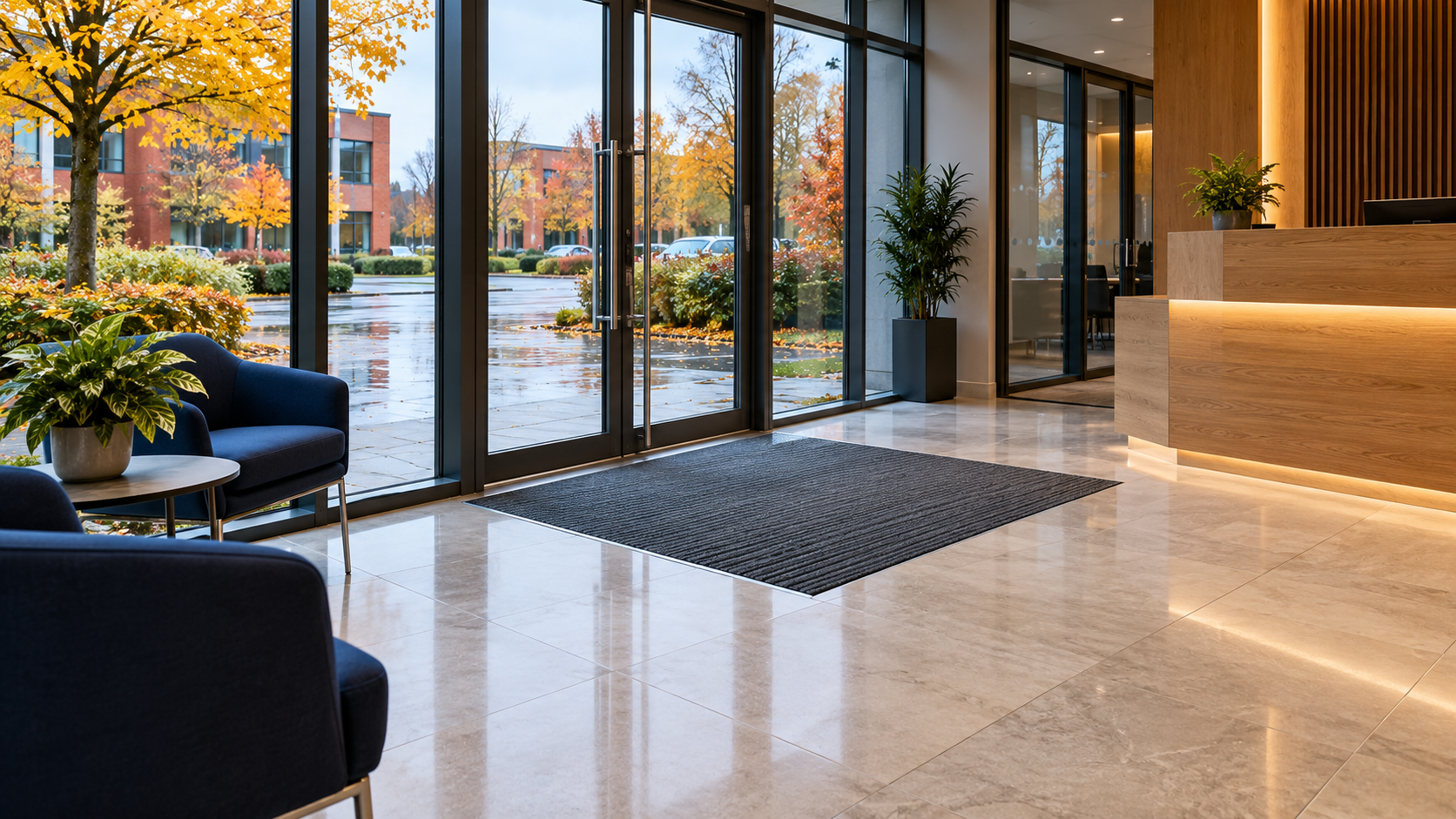
The side door that staff use on returning from a yard can receive more grit than the visitor entrance. If people step directly from outside onto a hard floor, grit can spread into a corridor before anyone reaches a mat. At a change in surface, it may lodge against a threshold strip or settle into the edges of carpet tiles. Walk the route at the end of a wet shift and compare it with the visitor route. Identify the first place where each path consistently shows marks.
Discuss mat placement with the building contact. If there is room for a larger mat, check how the door opens and whether the mat could interfere with access. Keep a record of mats that move, catch on the door or no longer lie flat so the responsible person can address the issue. Identify the areas that should be routinely vacuumed or swept and the places that need a more detailed discussion. When a problem is concentrated at a threshold, a separate note is more useful than increasing the stated cleaning frequency for every room.
If you are considering commercial carpet cleaning, explain how the carpeted office connects to the hard-floored spaces and whether people can change routes while a room is being treated. Flag modular tiles that have lifted, furniture with wheels and electrical points at floor level. Share any manufacturer guidance you have. It is worth agreeing who moves light furniture and when the room is next needed, particularly where a clear window is available only between two working shifts.
Plan the dispatch desk around information staff need to find
A dispatch or service desk can look cluttered to a visitor and still be organised for the people who work there. Keys, job cards, handheld devices and labels can have a specific place. When briefing a cleaner, distinguish between a clear worktop, a surface with movable items and a surface that must stay in its current arrangement. Explain what should be done with exposed sections if a document tray or equipment stand cannot be moved. Use labels or a picture of the station when that makes the boundary easier to explain.
Describe what happens when staff share the station. If two teams use it on the same day, one may expect the other to remove food wrappers or clean a small spill before the handover. Put that responsibility in the staff instructions and make clear which recurring work belongs to the cleaner. Include any agreed rules for phones, headsets or other frequently handled equipment. Someone checking the result should be able to tell whether an item was outside the scope or simply missed.
Check below and around the desk as well. Cable covers, discarded label backing and paperwork that slips behind a pedestal can all affect what is practical to reach. If staff need access to the back of a printer or a shared power socket, agree who can move equipment and whether a separate visit would make sense. A regular clean works best when routine tasks can be repeated without someone having to improvise around cables, live jobs or objects being kept for the next shift.
Match welfare room checks to use
A staff washroom beside a shift entrance may be used heavily at a handful of times and stay quiet in between. Find out whether complaints tend to come from the first team arriving or from employees at the end of a long shift. A room may be clean at the start of the day and short of paper later, or the room may be out of order because a fitting has failed. Describe the timing and the nature of the problem so it can be passed to the right person.
Agree where supplies are held, who is allowed into the stock area and which items each dispenser takes. When a cupboard is on another floor or in a part of the site that closes earlier than the office, make that explicit. Record what should trigger a low-stock message and to whom it should go. There is a practical difference between checking a dispenser, replacing its contents and placing an order. For supplementary provision, see the established washroom services information and include your own arrangements in the enquiry.
If a visitor washroom is separate, give it its own line in the schedule. It may be little used except during a demonstration or training day, when everyone arrives at once. Give the site contact a way to identify such days in advance. Where a washroom has a problem with a lock, hand dryer or other fitting, note who can report it and whether another facility is available. A brief that separates cleaning from maintenance makes the difference clear for employees as well as for the provider.
Set practical rules for a shared staff kitchen
The same kitchen may be used by a few people for breakfast, by a larger group for lunch and by a late team for drinks. Ask staff what normally prevents the room from being ready for cleaning. There may be no space to leave clean mugs, a microwave may sit next to a pile of unopened catering supplies, or the bin may be difficult to get to when people are sitting at the table. Fixing the storage or the layout can make a routine task possible at a time that previously did not work.
List what can be wiped as part of the regular visit and what needs its own agreement. For a shared fridge, agree responsibility for food and when shelves can be made available. For coffee equipment, identify what belongs to a supplier or a nominated member of staff. If staff clean up a spill as it happens, tell them where approved materials are kept and where to report a recurring problem. A schedule should make clear who deals with the remaining surfaces and whether any appliances need to be left alone.
The waste route deserves a line of its own. If the bins are outside or sit next to a vehicle area, explain who can access them at the relevant time. Specify which containers accept office and kitchen waste and what the contact should do if they are locked or full. Ask whether the route changes on delivery days. It is easier to agree a realistic sequence when the people involved know both where waste begins and how it gets to its designated container.
Give the visitor route its own standard
Clients can arrive for a meeting, to collect a product or to talk to a member of staff without ever seeing the main office. Walk from the point where someone signs in to the seat or meeting table they will use. Observe where they put a bag, where they touch a handle and whether the area used for signing in also stores paperwork for employees. A visitor route gives you a useful basis for deciding which visible surfaces need to be ready first and which can be addressed as part of a later room sequence.
A display area can contain materials with very different care requirements. Product samples can be fragile, demonstration equipment may remain connected and a display surface may show marks when people view it from an angle. Identify what the cleaner can handle, what can be cleaned around and which jobs are reserved for the person responsible for the display. If the room doubles as an interview or training space, describe how chairs and tables should be returned after a visit. Consider using a reference photo that does not show clients or confidential information.
If the visitor entrance shares space with employees clocking in, allow for their arrival pattern when discussing the time of the clean. Check whether there is an early delivery window that affects the same space. At a review, inspect the route when it is actually ready to receive visitors and report the exact surfaces that are falling short. That gives the people arranging the service a more reliable basis for adjusting the scope than a single general score for the entire front of the building.
Handle busy periods and operational changes in the brief
A schedule agreed in a quiet week can quickly be tested by a stocktake, an extra shift or a refurbishment. Ask the site contact what unusual events can be identified in advance and what information needs to be sent to the provider. If a temporary team is using the training room as a base, it may need different attention during that period. If contractors are occupying an office to install equipment, the site contact should say which areas have been released and what will require a separate discussion once the work is finished.
When a building has a seasonal busy period, write down what actually changes. The total headcount might increase while the number of desks stays the same, or a larger team might make heavy use of the lockers and staff kitchen without changing the visitor route. A small extension to one task can be more useful than changing every visit in the same way. Arrange a review when the temporary period ends so that the scope can be checked against normal occupancy again.
For a team responsible for both Chessington and Cheam premises, record site-specific instructions under separate addresses. A shift entrance in one building has little in common with a shared stair in another. Keep the same headings for the two records so people know where to look for access or exceptions, but name the relevant contacts and rooms in each version. The London office cleaning overview can help colleagues start a wider discussion if they manage multiple workplaces.
Ask for a quote that makes the work easy to review
Share the address, type of premises, approximate area and number of people using the office on a typical day. Include how many washrooms and kitchens are in scope, whether clients come into the building and whether there is a separate route for equipment. Give the start and finish times that matter, such as when the dispatch desk has to be ready and when the last person releases the office. Describe any part of the unit where permission or an escort is required before entry.
Identify a handful of things you expect to see improve. A service desk ready for the first shift, an entrance with less visible grit, or a kitchen that is consistently clear of waste at opening can all be described precisely. Ask how the agreed scope will be recorded and who will be able to change it if the working pattern shifts. If a carpet clean or a detailed clean after an office move is being considered, discuss that separately from the routine visit so you can see which work the quote includes.
At the first review, compare the actual work with the room list and the availability that was assumed. If a regular task is difficult to complete because the same room stays occupied, deal with the access issue directly. When feedback is about appearance, state the surface, location and time of the observation. If a change is agreed, confirm when it takes effect and what result will be checked. You can refer to the London office cleaning service for broader information when preparing the enquiry.
Make the first week useful for both teams
Before visits begin, give employees a short summary of what they need to do and whom they can contact. Include any days when desks should be clear, the areas where items are moved and the way to report a spill or access problem. A message that explains the required action and the time by which it needs to happen is easier to follow than the whole service specification. Put any details that should only be shared with authorised people in a separate record.
Give the person responsible for the site a way to capture early surprises. A previously unused room could be locked by a different team, a shared waste point might close earlier than expected or the work sequence might put the most visible area last when it is needed first. Resolve each point at the level where it occurs. If the issue is temporary, record its expected end. If it is recurring, revise the room instructions so the same misunderstanding does not return.
Once the timetable has settled, keep a copy of the agreed scope with a date and a named owner. Update it when the service changes, when a room is repurposed or when access moves to another door. That gives a new employee or manager something concrete to refer to when they raise a request. It also gives the provider a clear basis for discussing any additional work outside the original agreement.
A site diary can help during that first week if it is kept short. Record the date, the room or route and a factual note about what affected the agreed work. A line saying that the office was available twenty minutes later because an interview overran is useful. A general remark that the building was busy is harder to act on. Check the notes with the site contact after the first few visits and look for events that happen at a predictable time. Make the resulting change explicit so the next person reading the schedule can tell which instruction applies.
If responsibility for opening or closing the building rotates, give each person the same handover information. They need to know which doors should be closed, where the cleaning team can collect agreed supplies and how an access issue is reported. Consider what happens during annual leave and when the usual last person is called away unexpectedly. A deputy who knows the agreed procedure can avoid unnecessary delays.
Ask the people who will see the results first to take part in the early review. A dispatcher starting work, a colleague setting out visitor materials and the team taking its first break may notice different things. Invite each of them to comment on a specific area, then compare their feedback against the agreed scope. This can uncover where a task was useful but scheduled at the wrong point in the day. It can also reveal a supply or access problem that needs someone else to resolve.

Frequently asked questions about office cleaners in Chessington
Can you discuss an office attached to a Chessington warehouse?
Yes. Share which rooms are used as offices, which are in operational areas and who can grant access where those spaces meet. Include the welfare rooms and entrances if they are relevant to your enquiry.
What if dispatch starts before the office team arrives?
Explain when the dispatch room must be ready and when it is released by the previous shift. Identify the contact for changes so a delayed finish can be handled without guessing.
Can reception and the warehouse staff entrance have different tasks?
Yes. Describe how each entrance is used, the flooring and mats in each, and which route carries the most dirt. You can then discuss separate priorities for each area.
How should we handle desks with job cards and keys?
Agree what must remain in place, which surfaces can be cleaned around it and who clears the station when detailed work is required. Show the arrangement during the walk-through.
Can we discuss a different plan during a stocktake?
Give the provider the dates, the rooms involved and the times when access changes. Agree whether any tasks can move to another part of the visit and when the usual schedule resumes.
What should we tell you about the waste store?
Explain which containers serve the office, how the store is accessed and whether the route passes through a vehicle area. Name the contact who can deal with a closed or full store.
Can carpet work fit between two shifts?
Discuss the available time and the next use of the room, including any route through the room that needs to stay available. Mention furniture, floor sockets and any known carpet damage.
How do we compare the Chessington brief with a second London office?
Use the same headings for each brief, but record occupancy, priorities and access separately. Include the service areas for each address so you can compare the proposed work accurately.
Request a Chessington office cleaning quote
Tell Complete Clean Management how your office is used, when it can be accessed and which rooms matter most. Include any operational boundaries that affect the visit so they can be discussed as part of the scope.
Clients we service
Organisations featured across Complete Clean Management’s client portfolio.
















GOOGLE CUSTOMER REVIEWS
What our customers say on Google
Selected review excerpts from Complete Clean Management’s London Google listing.
★★★★★
“Really happy with the deep clean! The team were friendly, professional and did a fantastic job.”
★★★★★
“We engaged with Complete Clean Management and they came in and did an absolutely fantastic job.”
★★★★★
“We have recently started to use Complete Clean Management for various cleaning services to our domestic and commercial renovation projects.”
★★★★★
“The team is punctual, professional, and pays great attention to detail.”
★★★★★
“We’ve been using this office cleaning service for several months, and it’s been outstanding.”
★★★★★
“Complete Clean Management has transformed the cleanliness of our workspace.”
Selected excerpts, checked 6 November 2026. Leave a Google review ↗