
Complete Clean Management · South West London
Office Cleaners Purley
Professional office cleaning tailored to your premises, working hours and priorities.
Request a free quote Call 0203 092 2297

Map how a Purley office opens for the day
Write down the sequence between the first staff arrival and the first client appointment. A Purley workplace might open one room for early calls, leave a public entrance locked until reception is staffed and keep a shared stair available throughout. The cleaning brief should specify which spaces need to be ready at each stage. If a staff member works behind the reception desk before the door opens, consider whether the entrance can be done first and the work surface after the desk becomes free. Translate the sequence into a list of rooms with their earliest and latest available times.
Begin with the actual building, especially if your office is reached through a High Street frontage or an entrance off Brighton Road. Croydon Council’s Purley town centre page gives local context about those shopping streets. Your quote request should show where a contractor is expected to arrive, which floor is occupied and whether the office shares its approach with a shop or another employer. Distinguish the client address used on correspondence from a service entrance that leads directly to storage. Give both if that makes arrival clearer.
Time the sequence on one representative day. A receptionist can note how long it takes for the first waiting area to fill and whether client arrivals leave time for routine work. Ask the person who closes the premises how rooms are left at the end of the afternoon. Together those notes can show whether the biggest constraint is a short cleaning window, limited access to a single room or simply uncertainty about who has the key. Include the deciding constraint in the brief.
Give the arrival route an equipment plan
A business on a busy frontage may have a short route from the pavement to its front door and a much longer authorised route for bringing in equipment. Walk the authorised route with your building contact. Measure the tight turn at the door, identify any step and find out whether a lift can be used. When a delivery door is operated by another business, ask when it can be opened and who can give access. An office with a small cleaning cupboard may still need additional space during periodic work to hold tools while a room is being prepared.
Check the current arrangements rather than relying on someone’s recollection of a parking space. Croydon Council’s business parking and waste guidance is a starting point for local planning. Explain what the building itself can offer, whether that is a loading point, a permitted bay or a pedestrian route. Mention restrictions shown at the site and any time already reserved for another contractor. Provide enough information for a quote to account for carrying equipment between the access point and the work area.
Make an explicit distinction between routine visits and an occasional appointment that brings larger equipment. List what is normally stored on site, which room contains a suitable water point, and which areas need to stay clear during opening hours. If a supplier needs another route for a specific job, arrange that separately with the site contact. Record a fallback for a blocked entrance or a visit that would interfere with another delivery. Give the cleaner a contact who can choose whether to use an agreed alternative or move the appointment.

Specify occupied rooms in a small professional practice
For a practice with appointments, the daily order of work can depend on when consultations or phone calls stop. Make a short plan that separates the waiting area, interview rooms, staff offices and any records area. A client chair and small table may be accessible while a consultation room remains in use. Put that distinction in the brief so that the receptionist can check the most visible area at opening and give a realistic time for the private room. If a waiting area is shared with another tenant, record who handles touch points and cleaning around the sign in desk.
State the boundary around documents and equipment in each room. Describe whether chairs and loose bins may be moved, whether shelves can be reached and what to do when a worktop is covered. Staff can make useful surfaces available by keeping a particular tray or drawer for paperwork at the end of the day. Put any restricted rooms on the plan. If an office manager wants a room included periodically, agree how it will be cleared and who will be on hand to open it. This keeps exceptional tasks separate from ordinary access.
Build a simple priority order for a shortened visit. If an appointment overruns, the cleaning team may be able to complete the waiting area and other agreed rooms before returning to the occupied space. Decide whether to wait, defer or report an exception. The receptionist needs to know which option was taken so they can prepare the next day. Discuss any broader specification using the London commercial cleaning overview and include only the tasks that make sense for the premises.
Keep stairs and landings usable between floors
An upper floor office can be approached by a narrow stair shared with neighbouring occupiers. Treat the stair as a series of surfaces and access decisions. List the treads, nosings, rails, corners on the landing and the area around each door. Ask who is responsible for the public stretch before the first security door and who looks after each floor beyond it. Where there is a lift, consider the cabin floor and its accessible controls separately from the adjacent landing. A property contact can explain whether the lift is available when cleaning is scheduled.
Give instructions for keeping the route available during the work. There may be only one practical way to reach a suite, and staff carrying stock or visitors leaving an appointment may still need it. Discuss a sequence that allows the work to be split or timed around access. Identify where products and equipment can wait safely. A cupboard at the top of the stair may suit storage, while a small landing needed for turning would serve a different purpose. Assign the authority to reschedule work if a shared route is unexpectedly busy.
For premises with several occupiers, compare the proposed schedule with existing landlord arrangements. The communal cleaning overview can help identify shared jobs to discuss. Decide who reports a damaged nosing or a loose rail and who sees that the observation reached the person responsible. A cleaner can describe a defect found while attending a landing, while the managing agent can determine the repair. Use the floor and stair identifier in both records so they refer to the same place.

Use a room by room checklist for changing occupancy
When staff work a mixture of home and office days, the overall headcount can hide sharp variations in how rooms are used. One midweek day might use every desk and several meeting rooms, while Friday could see only a handful of people. Ask which areas carry the biggest load on each occupied day. A kitchen that serves the whole team in one lunch break may need attention when desks have hardly changed. For a Purley office where some employees travel from elsewhere in the borough, record the days they are typically on site and review the pattern after any working arrangement changes.
Use a checklist that distinguishes an empty room from a room that has been used and tidied. Tell the contractor where shared workstations are left clear and which private desks may have items that need to stay in place. On a single floor, office staff can mark a room temporarily unavailable for a long call or a training exercise. Decide where that information will be held, such as with reception or on a simple booking note. Include an instruction to contact the designated staff member if a high priority space has been inaccessible twice.
Give the cleaning team examples of how a successful reset looks. A hot desk can have its cleared surfaces attended and its chair put back in position. A training room can be ready with empty bins, visible floor space and cleared tables after staff remove their equipment. Spell out responsibilities for repositioning furniture if that forms part of the work. Check the specification when a room changes from private office to shared working space. The areas people touch and the point at which the room becomes free will probably change with the use.
Assess entrance dirt separately from chair wear
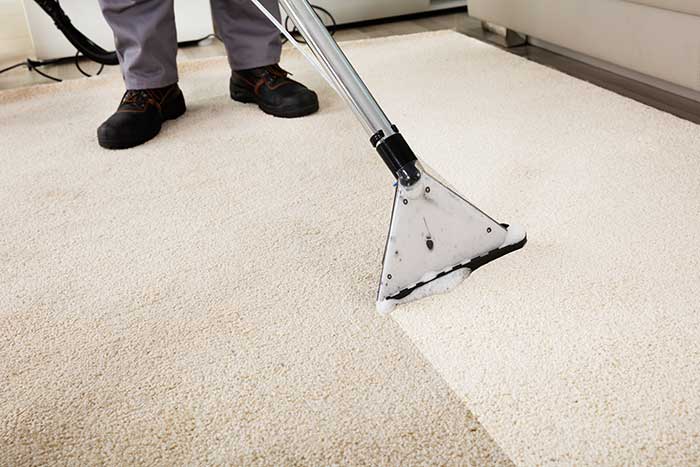
Look at flooring in daylight if the office permits it. An entrance carpet can show a darker line between the threshold and the next door, while carpet near a meeting table may show flattened fibres or marks associated with chairs. Photograph both areas and note what they look like immediately after routine work. Ask a provider to explain what can be addressed during an ordinary visit and what needs assessment as periodic work. Explain the type of floor covering if known, including whether the rooms use fitted carpet, individual tiles or a loose runner over a hard surface.
Record furniture that would have to be moved to reach the areas you are concerned about. Fixed cupboards, heavy tables and desks with connected equipment need explicit arrangements. If staff can clear loose chairs and cables during a quiet afternoon, show that in the brief. Identify where equipment will enter and what space can be kept free while the work takes place. For rooms needed the next morning, confirm the planned point at which people can return and which person will check readiness. The London carpet cleaning page is a separate reference when asking for that work to be assessed.
Keep the expectation realistic in the wording of the quote. Recurring loose grit, an individual stain, visible wear and a damaged carpet tile require different decisions. Ask which condition the provider has allowed for and what additional information they need. When a waiting room has one especially visible area, agree how results will be reviewed and when. A dated note and photo of the same small section can help a manager decide whether more frequent vacuuming, periodic work or a conversation with the landlord would be appropriate.
Check the washrooms when the staff actually use them
A washroom that looks orderly before opening may run short of supplies once several appointments and a staff break coincide. Count the rooms, basins, dispensers and cubicles, and describe who uses each facility. Ask which rooms the office maintains directly and which are included with rent or managed by a separate contractor. A shared washroom may need an agreed way for office staff to report problems even when the work falls outside the office cleaner’s schedule. Use a descriptive room name rather than referring only to the toilet, especially if the building has several similar doors.
Describe the tasks expected during the routine and the items to report. Wiping accessible surfaces, attending to mirrors and the floor, refilling specified dispensers and reporting a broken fitting are different activities. Set a point for reporting low stock and indicate who places orders. Write down where spares are held so the cleaner can tell the difference between an empty dispenser and an office without compatible stock. If you need to discuss dispensers or related managed provision, use the washroom services page as a separate reference.
When access needs to be maintained for visitors or a particular tenant, describe the timing and sequence the site expects. Clarify where warning signs and equipment can be placed while routes remain available. Record any periods with heavy use and whether the facilities contact can make another room available when required. If washroom complaints cluster around a certain time, inspect just before and after that period. The comparison can help you decide whether the specification needs a task added or whether replenishment needs to be better coordinated with use.
Write kitchen tasks around the end of the lunch period
In a workplace with a small kitchenette, clearing the worktop often controls how much of the room can be cleaned. Agree what staff do with leftover food, cutlery and containers at the end of lunch. Set a clear point at which the sink and preparation surface should be available. Specify whether appliance fronts, splashbacks, handles and the area around the bin are included. If a microwave interior or fridge shelf is in scope, state when staff will make it available and which food or crockery the office will handle first.
Check the route from the kitchen to the waste store. A cleaner may need to cross a customer entrance or a stair shared with other occupiers. Agree a time and destination for waste from the office and identify any point where it passes to the managing agent or separate collection provider. If the store needs an access code or key, describe the authorised process without placing sensitive details in the initial quotation. Include instructions for a full container so the contractor has a designated person to tell and does not need to improvise.
Ask people who use the kitchenette what problem repeats most often. The answer might be rings by the kettle, crumbs near a table leg, or a bin lid that is awkward to reach. Describe that point accurately and record whether the issue appears before or after the routine visit. An office team may be able to free work surfaces or adjust the position of a bin. The cleaning provider can then account for the remaining work and give a schedule that reflects when the kitchen is available.
Separate equipment rules from general instructions
An office can contain reception screens, shared printers, card readers, a presentation controller and staff workstations. List the equipment near the areas you want cleaned. Specify which surfaces may be touched, who supplies or approves the relevant instructions, and what must be left for staff or the maintenance provider. A general direction to clean all visible surfaces can cause uncertainty if an unmarked cover or cable looks movable. Put permissions in the room list so a contractor can see the boundary while planning the visit.
Pick a sensible route around plugged in equipment and busy desks. Explain where staff will move loose items and what happens if an office is left with cables crossing a walkway. If people frequently change the layout to run meetings, identify the person who knows the current arrangement. For a specialist device, arrange a clear handoff and state what the office team checks before it is used again. Give that instruction a different label from ordinary cleaning so it can be revised independently when the equipment is replaced.
Keep a simple exception register for repeat access or surface issues. An example is a counter that is usually occupied when the contractor arrives, or a printer surround whose finish is unknown. Record the concern and the member of staff who will decide whether to clear the area or obtain instructions. A quote can then reflect the usable floor area and cleared surfaces. Ask the contractor to describe assumptions for items whose access has not been decided, allowing the office to settle the point before the schedule begins.
Plan work around the last departure and first arrival
After-hours cleaning can be considered where a Purley office needs customer areas free during business hours. Check which doors are available at the requested time and whether the lift, alarm and internal lighting operate in the same way after staff leave. Record the proposed start and end window, and identify the employee or managing agent who can answer an access question. If another occupier locks a common route, make sure the schedule reflects that person’s timing. Do a walk through of the exit route while the building is in its usual evening configuration.
Set out the process for rooms that remain occupied after the scheduled start. Agree whether the cleaner should complete other rooms and return or leave an exception note. Ask the last staff member to leave enough time for a check of windows, doors and areas where supplies were used. Lockup and fault reporting can be specified without sharing alarm or key details in a quotation form. Keep instructions current through the site’s agreed process and name a person responsible for communicating changes to everyone who needs to know.
If you manage premises in both Purley and Coulsdon, give each address its own arrival window, access contact and list of rooms to complete before staff return. A common reporting form can help you compare outcomes across two offices. Keep site-specific information separate, especially when the same staff oversee both locations. Set a regular point to check for clashes with late meetings and adjust the brief when a clash keeps recurring on the same day.
Ask for a quotation with clear inclusions
A practical quote request begins with the address, layout and number of occupied workstations. Add separate information for the waiting room, offices, stair, kitchen, toilets and any storage included in the scope. Provide approximate floor areas where available and say whether work can happen during opening hours. Specify any facilities managed by a landlord. If you have an existing schedule, show where it works well and identify the problems that prompted you to look again. These details make it easier to compare offers with similar assumptions.
Ask the provider to list the routine by frequency and identify separately priced work. If a carpet treatment, interior appliance clean or additional visitor-room reset is wanted, give enough information to price it clearly. Confirm who supplies liners or washroom consumables and what the contractor assumes can be stored at the building. If an agreed work area is inaccessible on some days, ask how the exception is reported and whether the task moves to a different visit. A proposed weekly programme should make those differences visible to the person who manages the office budget.
Use the office cleaners London page when you are preparing a brief for more than one local office. Keep the comparison focused on the conditions that affect each site. You can ask for the same outcome in a waiting room at both properties while recognising that one may need to be done after a late clinic and the other during a quiet opening period. Share any expected changes in staffing or room use and ask whether the quote is based on the current layout or the future one.
Agree how to review quality when rooms are busy
Choose several checks that reflect the work you care about. Examples for a Purley office might include the floor under waiting chairs before appointments, the handrail at the turn of a stair and the counter near the kitchen bin. Record the time and condition against each one. Checking the same place at a similar time helps you distinguish a missed task from ordinary use following the visit. Add a brief note if a visitor booking or delivery affected the room after cleaning. A photo can be useful when it shows a particular point without revealing confidential documents or personal details.
Set up a route for feedback that staff know how to use. A missed area can go to a designated office contact, who can record the room and agree an action with the cleaning supervisor. A loose fixture, leaking pipe or access problem may instead belong to the managing agent. Decide who closes each item once it is checked. Over time, the register can show whether an instruction needs changing, a space needs a different frequency or a landlord issue continues to interfere with work.
Review the result after a reasonable sample of ordinary days. Give regular tasks, occasional work and building maintenance their own discussion so the office can see which change would help. If a specific room becomes a store or a new reception area is brought into use, update the room list before asking for a new schedule. Continue checking the points that matter to staff and visitors, and agree who is responsible for conveying any revised scope to both the office and the cleaning team.

Questions about arranging office cleaning in Purley
What details should I supply for an upper-floor Purley office?
Include the complete street address, which floor you occupy and how a cleaner should enter. Note whether a rear entrance, service lift or shared stair is used and who can give permission. Describe any access restrictions that affect bringing in supplies. If the public office entrance is different from the one contractors should use, point this out when you send your quotation enquiry.
How should I brief cleaners when appointments overrun?
Identify the person who can tell the cleaner which room is still occupied and when it is expected to become free. Agree whether to switch the visit order or leave a note for the office to follow up. Decide how to treat a priority room that regularly runs late. An adjusted schedule can be easier to manage when that room has a specific window rather than a general instruction to clean after closing.
How do we keep a shared staircase from being charged for twice?
Ask the building manager for the current task list and match it to the stairs and landings on your floor plan. List the difference between the landlord’s schedule and the work you want your office to commission. The communal cleaning page describes the relevant service category if the tenants are discussing a separate joint specification. Confirm who raises and follows up a shared area issue.
Do you need to see the carpets before we agree periodic work?
A description of the carpet, the locations of visible marks and recent photos are useful starting points. Tell the team if some furniture cannot move or if the room needs to reopen at a fixed time. Ask what else is needed to assess the work via the commercial carpet cleaning page. Keep periodic carpet work separate in the quote if you want to compare its cost with routine visits.
How should we schedule cleaning for a Purley team that comes in mainly midweek?
Describe the days when occupancy peaks and the rooms that see the biggest change. A training or meeting room may need a reset after its busiest day, while the kitchen and bins may show more pressure around lunch. Ask for each frequency to be shown in the quote. Review the pattern after staff settle into the schedule so visits still line up with actual use.
Can our office choose which kitchenette tasks go in the schedule?
Set out which appliance fronts, surfaces, handles and floors need routine attention and indicate any interior cleaning you want assessed separately. State who clears mugs or food and when the worktop will be available. If another tenant uses the same kitchen, give one person responsibility for communicating the agreed scope. Keep the instructions for supplies and waste beside the cleaning schedule so the contractor can follow the whole sequence.
Who checks that shared visitor washrooms have enough supplies?
Ask the person responsible for the building to confirm who stocks the dispensers, orders replacements and responds if an item runs out during opening hours. Your cleaning schedule can record what is checked on a visit and what must be reported. Use the washroom services guide when you need to discuss supplies or dispenser servicing separately from routine cleaning.
Can one quote cover offices in Purley and Croydon?
Ask for a shared quotation with a separate schedule for each premises. Give the access route, room count, occupied days and priorities for each address so the assumptions are clear. Compare your requirements with the Croydon office cleaning page. If a task or frequency changes later at one site, the individual schedules will make it easier to identify which part of the quote is affected.
Talk through your Purley office cleaning brief
Describe your workrooms, access and the tasks you would like priced. For other sites, start with the London office cleaning guide.
Clients we service
Organisations featured across Complete Clean Management’s client portfolio.
















GOOGLE CUSTOMER REVIEWS
What our customers say on Google
Selected review excerpts from Complete Clean Management’s London Google listing.
★★★★★
“Really happy with the deep clean! The team were friendly, professional and did a fantastic job.”
★★★★★
“We engaged with Complete Clean Management and they came in and did an absolutely fantastic job.”
★★★★★
“We have recently started to use Complete Clean Management for various cleaning services to our domestic and commercial renovation projects.”
★★★★★
“The team is punctual, professional, and pays great attention to detail.”
★★★★★
“We’ve been using this office cleaning service for several months, and it’s been outstanding.”
★★★★★
“Complete Clean Management has transformed the cleanliness of our workspace.”
Selected excerpts, checked 6 November 2026. Leave a Google review ↗






