Complete Clean Management · East London
Office Cleaners Rainham
Professional office cleaning tailored to your premises, working hours and priorities.
Request a free quote Call 0203 092 2297

Put the Rainham address and type of premises at the top of the brief
A cleaning enquiry for Rainham should begin with the full address and a description of the part of the premises used as an office. A room in or near the village centre can have a separate street entrance and a small number of people on site. The office inside a depot may be reached through a staffed gate and include facilities used by more than one shift. Havering’s Rainham town centre guide describes the village setting, while City Hall’s Ferry Lane decision places that part of Rainham in the London Riverside industrial context. A quote should follow the actual building, entrance and use.
Give the estimator a plan that distinguishes the rooms from the wider site. At a depot, show the reception, transport office, staff kitchen and any washrooms you want included. At a village office, list the private suite, customer rooms and any communal areas included by agreement. If an adjacent unit, yard or operational floor needs its own scope, name that area separately. Confirm who has authority to add work there and who oversees the site when the office team has left. Put a contact beside each of the entrances the cleaner may need.
Describe the working week using actual times when rooms are in use. An office can go quiet after its last appointment even though dispatch is active, or staff may remain late to prepare the next morning’s work. The useful information is when the space can be handed over and when people need it ready again. Include a quiet day and a more demanding day in the brief. That gives the estimator a way to work through the likely exceptions before the service starts.
Build an arrival procedure with the gate or reception team
Where a Rainham site has a gatehouse, ask the facilities lead to explain what a contractor must do before entering. A cleaner may need to report at a specific point, sign in and follow a pedestrian route to the office. Equipment may enter by a separate approved route. Give the site contact the visit window and agree what the cleaner should do if the duty person is delayed. Tell both teams where to meet and where equipment may be left temporarily. Make sure the arrival works at the planned hour as well as during an initial walkthrough.
Consider an ordinary visit and a larger job separately. A regular kit might be carried easily between two buildings. A machine or a larger stock delivery can require a suitable unloading position, a person to open a wider door and enough space to manoeuvre. Agree the route with whoever controls vehicle movements and building access. A gate used for deliveries may be physically open while the site has other work going on. Keep waiting and movement within the site’s agreed arrangements. Check the last part of the route to the actual office, including thresholds, ramps and doors that lock automatically.
For an approach on foot, National Rail lists Rainham station on Ferry Lane. The station address is a point of orientation. Give a first-time visitor the entrance and unit name of the actual property, including where it differs from the delivery address. If the site has another business on the same approach, describe the sign the cleaner should use to identify the correct door. Add the route out and the contact for any change before approving the visit window.

Keep the transport desk available while the paperwork is live
A desk supporting dispatch can remain in active use even when public reception has closed. There may be worksheets, labels, keys and a printer arranged for a particular task. Ask the person who runs the desk when each surface can be cleared. Give the cleaner a way to identify what can be reached and which items stay in place. A brief that names the printer table, document tray and place where drivers sign in is easier to follow than a general instruction to clean around everything. Have the person who owns the work release the surface at a predictable time.
Discuss which tasks can proceed before the transport office becomes available. A visitor room, part of a corridor or a second workroom may be released earlier. Give the duty contact the authority to confirm that order. If a late vehicle keeps the office busy, the cleaner can record which part still needs attention and when it can next be reached. Ask the people handing over to use the same short report for an ordinary delay and for a planned exception. That lets the supervisor decide whether a repeated issue needs a revised schedule.
Where a printer or dispatch device stays connected, identify who can move it for periodic work. A unit with a desk under shelving can collect dust on accessible surfaces while the area behind equipment remains restricted. Put an occasional window for the work in the schedule and ask the staff member to clear the space first. Give the next user a check for the position of chairs, paperwork and equipment after the room is returned. The cleaner should understand what a finished area looks like without having to interpret the working paperwork itself.
Mark the office boundary at the door to the operational floor
Walk through the building with the person who manages the working side of the site. Mark the last point an office cleaner can reach without asking for additional access. A door can lead from an office directly to an operational area, or a shared corridor can continue past the staff facilities. Put the approved route on the plan and name the contact who can escort someone if needed. The office price should make the boundary visible, especially when the site has several different contracts or occupiers with their own work practices.
Identify areas where routine office work is suitable and where the type of dirt or equipment needs a separate assessment. Mud from footwear in an office doorway is different from an unknown residue from a work process. Give the estimator information about the affected floor, the cause if known and the person who can explain the conditions. Discuss tasks outside the office through the London commercial cleaning overview, with the rooms and activities made clear. Keep the ordinary desk and washroom schedule readable by recording the separate requirements on their own line.
Explain how the route changes when a staff room is used by the operational team. The cleaner may reach it during a quiet slot but need to wait when there is a shift change. Ask where clean equipment is kept and where a cleaner can return it without crossing a route that is out of bounds. Decide who is responsible when an issue is reported beyond the office boundary. A clear room list and a contact at the boundary help keep both contracts understandable when the site layout changes.
Find the point at which yard grit reaches the office carpet
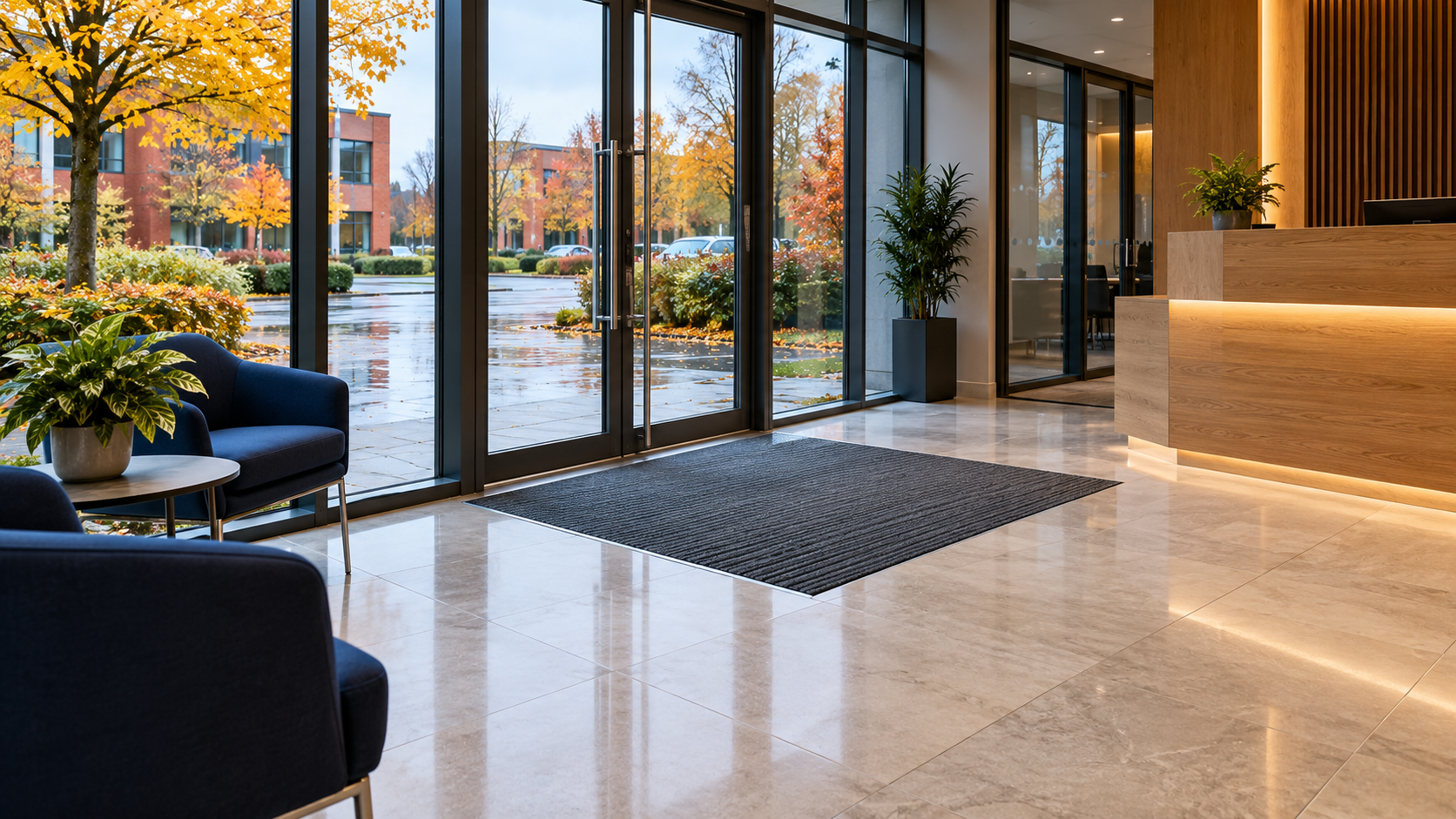
Start at the door people use most often after coming from outside. Look at where footwear passes over matting and where the next change of surface occurs. A hard strip can carry fine grit to a carpeted corridor, especially where people turn into a room. A doorway used for both visitors and staff may show a damp track on one side and dry dirt on the other. Inspect the route after typical use and give the cleaner the particular areas that need attention. Check whether a worn, moving or saturated mat needs to be reported to the building contact.
When a mark stays on textile flooring after routine vacuuming, describe its location and the material. Point out areas of wear or repairs that were present before the work. If a stain is linked to a spill or other known source, include that information. Discuss periodic carpet care and state when the floor can stay clear. A supervisor should know how long the room needs to be available, who moves furniture and when the next user needs to come through. Make the time for reopening part of the plan.
Decide which marks should be reported before work starts and which can be assessed after ordinary cleaning. Ask the person opening the office to look at the same section at a known time. An area that looks clean immediately after a visit can take in fresh grit during the first staff arrival. If that is the recurring pattern, consider changing the matting or checking the entrance at a different time. Record the result and give any repair issue to the correct owner so it can be resolved separately.
Schedule break rooms and washrooms between real shifts
Look at how people use the break room across the working day. A room may be quiet during a walk through and unavailable at each change of shift. Ask which worktops can be made clear and what the last person on a break can do to release the room. Provide a place for mugs and lunch containers so the cleaner can reach the sink and surfaces. Name the person who clears food from a shelf before periodic work. If the office also has a small kitchen for visitors, decide who looks after it and how it differs from the main staff room.
Check the washrooms used by each shift and identify the fixtures that need regular attention. Give the cleaner the correct refills and a route to the storage cupboard when the site office is closed. The amount of stock needed to reach the next visit can change on a day with extra staff or visitors. Choose a reserve level and name the person who orders replacements. Agree a separate route to report a fault with a lock, dispenser or fitting. Provide the room name and fixture so the issue reaches someone who can find it.
If you want a distinct arrangement for refills or servicing, use the washroom services page and supply a fixture list. Give the estimator the times when a room can be closed for detailed work and how people use another facility if needed. On a first review, check the stock after the busiest shift as well as after the clean. That shows whether the ordinary visit and reserve level are enough for the people who actually use the room.
Treat the village office as a separate type of visit
For a smaller office near Rainham village centre, start the walkthrough where clients arrive. A single front room may be a waiting area, interview space and place to receive post. Give staff a position for documents or packages that must stay. Then identify which surfaces need to be accessible before the cleaner enters. If one room serves different purposes over the day, put the expected layout beside the booking or room name. That makes it easier to prepare the room for the next person without moving work that belongs to an earlier appointment.
Check the materials around the front door, hallway and first workroom. Period premises and more recently fitted units can have a mixture of floors and trim. Give the estimator information about any older finish or damage, and ask which routine can be used in each area. If staff use the only hall to enter the office, plan any wet work for a window in which they can keep clear. Give the person opening up the expected return-to-use time. If access depends on a shared passage, ask who is responsible for the surfaces outside the tenant’s door.
Compare the requirements with those of a separate logistics office before assuming the same visit will work for both. A customer-facing village suite can need a clear room for the first appointment, while a dispatch office can depend on a different handover. If the organisation also has premises in Hornchurch, use a similar quote format while describing the rooms and access separately. Give each site a short list of outcomes appropriate to the work it does.
Match internal waste to the agreed Rainham collection process
Put the office bins and collection route on the plan. A site may have a common store serving several units, or separate places for office waste and material from work processes. Tell the cleaner which containers are approved and what is outside their remit. Identify the person who controls the store and confirm whether it can be reached after the usual office hours. If a locked gate or an active vehicle route prevents transfer, give the cleaner an authorised internal holding point. Keep an agreed way to report a store that is full or has become inaccessible.
Use Havering’s business waste guidance and your provider’s instructions to set the limits of the service. Decide who presents the material and who calls the provider if a collection is missed. Label office containers and give staff a separate place for confidential records or material waiting to be returned. Boxes that still contain stock can look like packaging to somebody arriving at the end of the day. Ask staff to mark what can go. Clarify which handling remains under the operational team and where their bins are kept.
Review the route on a day with larger deliveries or unusual staff numbers. Identify the first place where material builds up. It may be a small kitchen bin or a packaging point near dispatch, rather than the final store. Agree who can change the capacity and frequency. Write the new plan down when the collection provider, layout or access times change. A cleaner finishing after office hours should have an arrangement that works without borrowing another occupier’s bin or leaving material beside an exit.
Specify access checks for early, late and occasional visitors
A building might be opened by a gate team on weekdays and by a different manager at other times. Name the person who confirms access in each case and say which doors they control. Give the cleaner a safe waiting point and the contact who can make a decision if the office is unavailable. Walk the final route out as part of the induction. Establish which doors close automatically, what the cleaner checks before leaving and whom they tell about a fault. Keep credentials in the system approved by the site rather than in an open room list.
Work through a change of plan before it happens. A late driver or staff briefing may mean the usual office is occupied. A gate or door may be temporarily unavailable. Decide what other rooms can be reached and who can authorise an alternative. If part of the job must wait, give the supervisor the exact room and the reason. A note that the reception was occupied until a particular time is more useful than a report that access was difficult. Ask the relevant person to agree how the item will be completed and when the next check will happen.
For an organisation with another office around Elm Park, keep the access handover particular to the address. A shared supervisor should know which building uses a gate and which relies on a tenant’s keyholder. Give relief staff the information for the actual visit and confirm that the site knows they are expected. Review the instructions after an office move, a changed gate arrangement or a new occupier. The same security and access process should work when the usual contact takes leave.
Price occasional work against the restart time
When the office needs a first clean or a periodic floor job, begin with the time it must be available again. A desk used by an early shift may need to be ready long before a public appointment room. Tell the estimator when staff can clear the surface, who moves chairs and how equipment can be brought to the room. Give enough time for the floor and furniture to be returned to use and for the duty contact to check the area. If the whole room cannot be released, discuss what can be done in stages and how the site will keep its routes usable.
If a new room is being fitted out, ask the office and the site lead to agree when it passes to the cleaner. Explain who removes temporary coverings and materials and which surfaces will be exposed before furniture goes in. Record the conditions that existed before work starts. Give the estimator any information about newly fitted finishes or a repaired section. Separately list the tasks that should become regular once people move in. That helps the office compare the first visit with the quote for the routine.
After a change, check whether the plan reflects actual use. A new door can bring a different route into the room, and a moved workstation can leave a space accessible that was previously blocked. Tell the cleaner which area needs a new check and who can approve it. Keep the change in the main schedule so it is clear on the next visit. For each additional job, ask what the work includes, how it will be handed back and when the office should review the result.
Review the service at the point when staff need it
Pick a few checks the duty person can carry out before staff use the rooms. At a logistics office they might include the walking line from the entrance, a clear space at the dispatch counter and supplies in the nearest staff washroom. A small village office might check a meeting table and the route to the first appointment. Give the reviewer a specific time and place. Do the same check on a normal day and after heavier use, then compare the result against the brief. Decide who should be told if something needs attention.
A problem should be recorded with enough information to explain what happened. A door might have been locked, a room occupied or a material outside the agreed scope. Another issue could be a leaking fixture or a supply that was used up before the next visit. Send it to the person responsible for the relevant part of the arrangement. Record the agreed action and when it will be checked again. If the same issue comes up each week, consider a different visit order or a separate window for that room.
Ask the cleaner and duty contact to use the same room names when they report what is ready. If the office uses photographs, keep them focused on the relevant empty surface and follow the site’s rules on what can appear. Give the first review enough context to distinguish a one-off busy day from a regular access problem. Make any changes in the shared scope and confirm that the people opening the building have the updated plan.
Send a Rainham quote brief that shows the work and the access time
Give the full address, unit, entrance, site contact, rooms and floor types. Explain the times when staff, drivers or visitors are present and which facilities are shared. Provide the approved route to the office and the point where it meets the operational side of the site. State what must be ready at the beginning of the next working period. Include ordinary waste handling and the stock arrangements in the scope. Ask which parts of the job depend on staff clearing desks, moving furniture or unlocking a store.
Request separate lines for recurring visits, periodic floor work and an initial clean. If you want a different scope for an operational or communal area, show where it starts and who can approve it. Check whether the visit includes time for signing in, reaching the rooms and securing the premises at the end. Describe what happens if a room is still occupied or the route is closed. Give the same information to each estimator so a difference in price can be traced to a difference in the proposed work.
The London office cleaning directory covers other addresses. Keep Rainham’s room list and gate or entrance procedure on their own site sheet. Confirm who will receive a report if the cleaner cannot complete part of the scope and when the first review is due. Share the agreed version with the people who will release rooms and receive the service. That helps a quote become a routine staff can follow even when the working day varies.

Questions about arranging office cleaning in Rainham
What should I include for an office inside a Ferry Lane depot?
Give the gate, unit, pedestrian route and person who can release the office. Show where the operational floor begins and what equipment can enter. Give the expected shift pattern and note whether a machine or bulk supplies need another approved route.
Can the Rainham office be cleaned while dispatch is still working?
Identify the rooms released first and give a contact who can say when the dispatch desk is available. Agree quieter tasks that can proceed elsewhere and what happens if the room stays occupied. Record the particular task to be finished later.
Which station information is useful for an estimating visit?
The National Rail Rainham page identifies the station on Ferry Lane. Provide the actual door and unit as well. If equipment needs a different approach, confirm the approved unloading point and who will meet the cleaner.
Can you assess a carpet where people come in from the yard?
Show where the mat ends, what staff bring through and which marks stay after routine vacuuming. Give the flooring material and usable room window. Discuss commercial carpet care separately where periodic treatment is needed.
What if washroom stock runs out between shifts?
Check which fixtures each shift uses and how much reserve is available. Agree who orders refills and who can deal with a fault. Give the fixture list when discussing washroom services and check stock after the busiest period.
How do we handle office waste when the depot store is closed?
Agree an authorised internal holding point and who can reopen the correct store. Identify who presents material and who contacts the provider. Refer to Havering’s business waste guidance when writing those responsibilities.
Can we use the same scope for Rainham and Hornchurch?
Compare the same headings but use separate room lists and access procedures. A depot gate and a High Street office entrance can need very different arrangements. See the Hornchurch office guide for the other site.
How do we price a first clean before reopening a transport office?
Give the release time, the finishes and the time the first shift needs it. Confirm who clears paperwork, furniture and packing material. Ask for a separate initial scope and agree which changes go onto the ordinary visit list afterwards.
Talk through your Rainham office cleaning brief
Describe your workrooms, access and the tasks you would like priced. For other sites, start with the London office cleaning guide.
Clients we service
Organisations featured across Complete Clean Management’s client portfolio.
















GOOGLE CUSTOMER REVIEWS
What our customers say on Google
Selected review excerpts from Complete Clean Management’s London Google listing.
★★★★★
“Really happy with the deep clean! The team were friendly, professional and did a fantastic job.”
★★★★★
“We engaged with Complete Clean Management and they came in and did an absolutely fantastic job.”
★★★★★
“We have recently started to use Complete Clean Management for various cleaning services to our domestic and commercial renovation projects.”
★★★★★
“The team is punctual, professional, and pays great attention to detail.”
★★★★★
“We’ve been using this office cleaning service for several months, and it’s been outstanding.”
★★★★★
“Complete Clean Management has transformed the cleanliness of our workspace.”
Selected excerpts, checked 6 November 2026. Leave a Google review ↗