Complete Clean Management · East London
Office Cleaners Upminster
Professional office cleaning tailored to your premises, working hours and priorities.
Request a free quote Call 0203 092 2297

Use the working week to design the Upminster schedule
A useful brief for office cleaners in Upminster starts with a calendar. Mark the mornings when everyone comes in from the station, the days clients visit, and the hours when a particular suite is used for appointments. Then write down what has to be ready before each of those points. For a business that runs consultations, a clean waiting area may be important from the moment the first visitor arrives. For a team with a weekly planning day, the meeting room and its shared kitchen may need most attention after the office empties.
Take an ordinary week as the starting point and ask staff what makes it different from a holiday week or a month end. Look at the booking diary rather than assuming desks are used evenly. A room can be booked throughout the day while a larger bank of desks is mostly vacant. Cleaning a meeting room after every relevant use, where that is part of an agreed plan, calls for a different arrangement from vacuuming a larger open area at the end of the week. The useful output is a short schedule that connects each room to the times it has to be ready.
Keep the proposed visit windows and the tasks in two columns. That lets you move the time of a particular visit without accidentally dropping the work it covers. If the Upminster office is one of several workplaces you manage, set up the same comparison for each. The London office cleaning overview can sit alongside the individual site briefs when you need a view across the whole portfolio.
Send an arrival note that works from Station Road
Someone starting near Upminster station may arrive on foot, while equipment or boxed consumables may need a different approach. The TfL Upminster station information identifies the station and the Station Road and Hall Lane interchange. In the job notes, give the actual business address and the entrance that is in use at the agreed time. Mention the floor, which buzzer to use and whether there is an authorised waiting point. Keep any entry credentials in the channel your organisation uses for secure access.
If the office sits above another business, walk the entry route with the person who opens it. Their front door may be accessible only while the shop or reception below is staffed. Ask whether a separate stair door becomes the normal route in the evening. A practical test is to stand outside at the proposed time and try to follow the instructions exactly as written. Note any lift, narrow landing or turn that affects moving a machine. Confirm how equipment comes out again if the public door closes during the visit.
Havering publishes information on its car parks, including options listed under Upminster. A listed car park is one reference for planning an arrival. Check the permitted arrangements at your actual premises separately, especially when the equipment must be unloaded near the door. If storage is available upstairs, document what can stay there and who keeps it clear. This can make a straightforward routine possible without moving the same supplies in and out every visit.

Keep meeting and appointment rooms ready between bookings
Start with a list of what a person sees from the door of each room. An appointment room may have a single visitor chair, a small table and a glass panel at eye height. A training room may have a large set of tables pushed together with space for bags under the chairs. Specify the surfaces that can be cleaned after each booked period and the position furniture should return to. A photograph of an empty room can make that instruction easier to follow than a sentence that says to leave the room ready.
Decide what happens when the previous user has left documents, glasses or presentation materials. The meeting organiser can clear private material and equipment, while the cleaner handles the surfaces the office has approved. A tray for forgotten items can be useful if the client controls what is placed there and how it is collected. Choose a different route for anything confidential. When the room is occupied at the cleaning time, record the conflict and agree who can offer a second window.
Ask the team to describe the most common surprise. If people often book the room over lunch, its baseline morning clean may be enough until a client booking in the afternoon. If a large training day leaves tables and chairs in a different position, schedule time to inspect the layout and restore it afterwards. The important point in either case is to specify what the room needs to look like for its next users and put any extra access time in the plan.
Give small upstairs suites a realistic equipment plan
A small office can take longer to prepare than its area suggests if every visit begins with a trip up a stair to collect a key or a trolley cannot pass the turning point. Look at the practical route from the front door to the store and then to the rooms. Confirm which sockets the building permits the cleaner to use and where the team can fill or empty equipment by agreement. The office manager should introduce the provider to the relevant building contact if these decisions belong to different people.
Do a storage check before agreeing a regular visit pattern. A tidy cupboard with room for a vacuum and the necessary supplies can remove much of the repeated set up. A narrow shared cupboard may work if the client labels a dedicated shelf and the building confirms who can use it. List supplies that come with the service and items the tenant will order directly. Mark where spares belong and how damage to the equipment is reported.
A heavy periodic machine can require a distinct plan even when the everyday kit is already on site. Ask for a separate estimate if moving it needs a lift booking or if bulky furniture limits the area that can be treated. Where the job includes a common stair or landing, confirm who owns that part of the work and when it can be completed without interfering with access to the other units. The commercial cleaning service overview is a starting point when the scope extends beyond the leased office rooms.
Use an inspection route through visitor-facing spaces
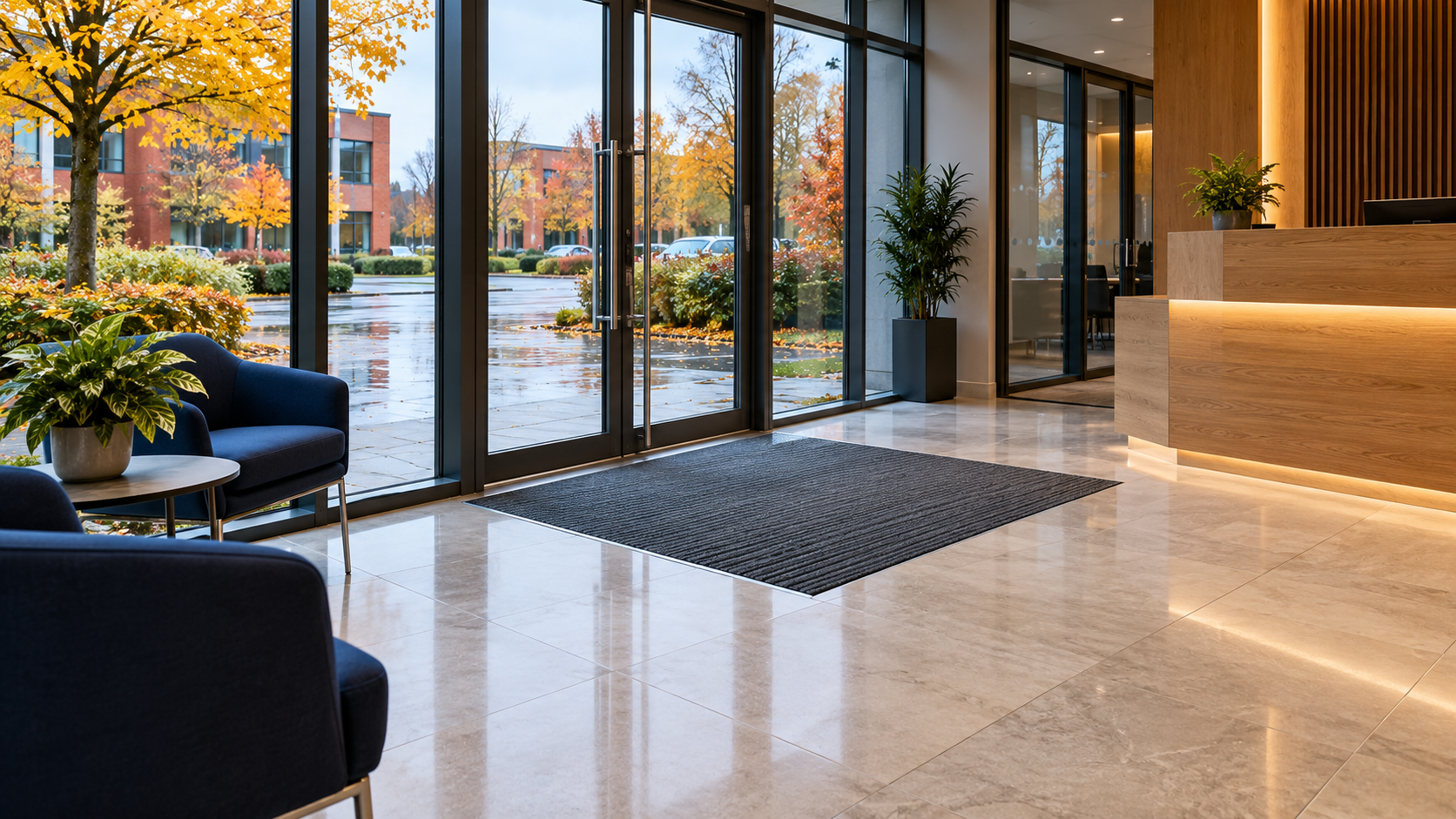
Rather than trying to inspect every corner after every visit, agree on a few representative points that reveal how the schedule is working. Start at the first door a client uses and walk to the room where they are received. Look at the inside of the glass, the edge of a mat, the tops of waiting chairs and any table used for signing in. Move on to a staff space and a washroom. Select a couple of points in each and agree what an acceptable result looks like at a particular time of day.
An inspection at the opening of a suite answers a different question from an inspection after a busy lunch. Record the time and what the area has been used for since the last clean. If a table shows a fresh cup mark and the previous meeting has just finished, the observation can prompt a discussion of how the table is reset between bookings. A line of dust behind chairs that is visible over several checks is an indication to revisit the task list or the furniture access.
Keep a simple record of each observation and agree who has authority to act. It is useful to distinguish a change the client can make, such as asking staff to leave the end of a counter clear, from a change to the cleaning brief. Agree the next review point and who will close the item. A short series of dated notes is easier to follow than a general score for the entire office, especially when a manager is responsible for premises in Upminster and other areas.
Match floor care to the route from the pavement to the desks
Trace the route taken by visitors coming from Station Road or the town centre rather than treating all floor space as one surface. The ground floor door may open onto a small mat and a hard landing, followed by stairs and a carpeted office above. On a wet day, the first carpet patch may be several steps from the entry. Decide which parts of the route are within the cleaning scope and which are controlled by the building manager. Check corners and edges along the route where ordinary traffic pushes grit out of the main walking line.
Review the condition of the floor before deciding what to schedule. A carpet made from tiles may have a spill restricted to two of them, a worn chair track and a build up of dirt at the threshold. Ask how routine vacuuming and spot work will be done and describe any persistent issue separately. For specialist advice on the right treatment and preparation, send photographs and the flooring type when enquiring about commercial carpet cleaning in London. Agree access and reoccupation around the provider's stated method for your material.
For a periodic visit, book the areas in order of availability. If a room hosts confidential appointments, verify when records and small equipment can be moved by its occupiers. Agree how the team will know when it can use the treated floor again. If a chair mat or a damaged edging strip has caused a visible line, note that alongside the cleaning scope and give the repair or replacement decision to the appropriate contact.
Keep records and personal equipment with the people who own them
A room with appointment records or case files needs an explicit clear surface policy. Choose which parts of the desk can be attended to when items remain there and how the room owner signals that an area has been cleared. A locked filing cabinet can have the outside cleaned if the client approves the material and method. Discuss what should happen when loose pages sit on an otherwise clear desk. Put instructions for secure disposal into the client's own waste and document handling arrangements.
Give client staff simple habits that make the routine predictable. If headsets, chargers and desk trays are returned to marked places at the end of a visit, the approved parts of the surface are easier to reach. List shared equipment separately. Some organisations want to handle headsets and monitors themselves because the equipment is personal or sensitive. The service brief can show the difference between a shared table, its networked display and the particular input devices belonging to an employee.
For keys and access arrangements, separate the description of the route from the access credential. Give the assigned team only what is required through your normal site process. Agree where questions are raised if a room has been locked after the last appointment, and have the office contact say whether the room can be left until a later visit. A short room status record helps the cleaner and the facilities team to account for an omission without identifying the people who used the space.
Keep a small washroom inventory that is easy to check
Walk the washrooms with the person responsible for supplies and list each dispenser by room and fitting. A high turnover paper roll in a visitor facility needs a different reorder point from soap in a lightly used staff room. Keep only compatible supplies in the allocated space and decide who checks the reserve. If the office uses two styles of dispenser, mark the boxes with the room names. This helps a replacement visit cover the basics even when the usual team member is absent.
Choose a time to inspect each facility based on actual use. A room used by people arriving from an early appointment block may benefit from a check beforehand. A facility shared with another suite may be busiest at a different hour. Establish who commissions its cleaning and what your team can change independently. The washroom services page gives a starting point for discussing any extra supply or servicing needs when you request a quote.
Report fixture problems in terms that a building contact can act on. Use a location and an observation, such as a dispenser that jams after being refilled or a tap that leaves water on the ledge. Decide who can request repair and who takes temporary action if a room has to be withdrawn from use. At a review, compare what the cleaner actually replenishes with the products being purchased. That can reveal whether an occasional stock issue belongs to the cleaning timetable, purchasing or a failing fitting.
Set a kitchen routine for the people who share the room
A compact tea point can look tidy most of the day and still be the place where staff notice a poor reset. Walk through the end of an ordinary lunch break. Check which counter is cleared, where people leave dishes and what happens when the small waste container fills. Define regular work on reachable surfaces, the sink, bin rims and approved appliance exteriors. The occupiers can agree their own rules for food, mugs and internal appliance care alongside the contractor's task list.
A shared fridge can be listed for periodic cleaning with an appointment and a named person to clear its contents. Decide which cupboard holds cloths or supplies and where dishes belonging to staff can remain. If another tenant uses the kitchen, check who authorises any room wide work and whether the booking calendar shows when the space is available. Keep a separate note for things that cannot be left on a counter or moved without the tenant's input.
When a kitchen has repeated problems, investigate one task at a time. A liquid mark beside the kettle might call for a different arrangement from crumbs along the floor edge beneath a movable bin. Date any adjustment and see what changes after the next busy period. Keep the weekly timetable simple enough that a stand in person can follow it. A short shared room checklist can cover the regular tasks, while a longer document gives access instructions and identifies anything that needs advance preparation by the users.
Compare quotes by room, timing and the work they include
Request a line for each regular visit pattern and a clear description of occasional work. Provide the size of the usable office, how many rooms are normally open and what surfaces are present. Give the estimated time from the authorised entrance to the store so the quote reflects the working slot. If the cleaning team is responsible for doors, lighting or setting an alarm at departure, document the expected handover and the contact for exceptions. The room list should distinguish staff areas, private rooms and any common facilities.
Check how providers have interpreted the frequency. A proposal can include one pass on every working day, with certain rooms receiving more frequent attention only if they are used. Another may propose fewer long visits that cover more tasks at once. Read each against the moments when the business needs its rooms ready. Ask how an occasional client evening or training session would be requested, and whether work outside the usual schedule would be separately priced.
Decide who supplies each item before comparing final figures. Paper stock, liners and specialty products may be included, ordered through the client or supplied by the building. Ask what assumptions the provider used for water, storage and access. Periodic floor work should be easy to distinguish from routine work in the written offer. If an existing provider is leaving, confirm what equipment and stock belong to you before treating either as available to the incoming team.
Coordinate changes between Upminster and neighbouring workplaces
A manager looking after several addresses may have a shared template for inspections but needs a separate room list and handover at each. One office could be in an upper floor suite accessed through a retail entrance, while another has its own car park and meeting space on the ground floor. Do not use a timetable from one address as the basis for the second without a walk through. Instead, compare the tasks that are genuinely alike and keep local differences visible in the quote and service schedule.
Ask every site for the same few pieces of operational evidence. An appointment calendar, an approximate floor plan and a list of shared areas are usually more informative than a broad statement that the offices have similar needs. Make someone at each address responsible for confirming any change. A facilities manager can compare quality checks across sites while a local contact handles the practical questions about letting people in, releasing an occupied meeting room and telling the provider about a change of hours.
If you manage other suites nearby, use the Hornchurch office cleaning guide or the Elm Park office cleaning guide to start their local briefs. Keep a simple record of which building owner looks after the front approach and which tenant is responsible for interior rooms. When work is reviewed at more than one address, agree each location's actions separately so a small issue at one building can be addressed without reopening the other site's whole arrangement.
Give the first month a clear starting point and review date
Arrange a joint walkthrough before the agreed start. Ask the tenant contact, cleaning supervisor and building representative to settle the parts of the schedule that depend on permission or access. Make a record of any existing damage, carpet discolouration or recurring water mark that will need separate attention. Confirm the surfaces people expect to be clear for cleaning and where the authorised contact can be reached during a visit. Agree a first review date before the first routine clean takes place.
Use the initial visits to test realistic access and room availability. If a room is regularly occupied late, agree how to move that part of the work within the week. Check the number of times the visitor area is used and whether its planned reset keeps pace. When staff report an issue, capture the time and room and agree a response by the person who controls it. This is also a good point to confirm that any separate landlord duty is actually being carried out at the agreed frequency.
Before the review meeting, bring the marked plan and a handful of observations. Mark which tasks are working, which ones are impractical during the planned hours and what has changed since the walkthrough. If a new visit time is proposed, check that the relevant doors, building contacts and rooms are available then. A short, dated update to the scope is more reliable than a verbal change remembered differently by two teams. Ask for revised terms where a change affects the cost or the responsibilities of the occupier.
Keep a copy of the accepted schedule somewhere the office manager can find when the person who arranged it is away. Include the start date, current room list and the next review. If a new tenant joins a shared building, ask the managing agent to confirm any changes to access or common areas before passing on revised instructions.

Questions about arranging office cleaning in Upminster
Which door should I put on the brief for a suite near Upminster station?
Use the door the building authorises at the time you want the visit, with the unit, floor and buzzer or sign in point. Include a second entrance only if there is a specific reason to use it. The TfL station information is a useful orientation link alongside your exact address and building directions.
Can we plan the visit around evening appointments?
Give the usual finish times, the rooms in use and the first point when they are available. Discuss an order that lets the team handle vacant areas while an appointment runs over. Agree what happens when the last room stays occupied and who can confirm whether a different slot is available before the next booking.
What matters if our carpeted office is up a narrow staircase?
Describe the landing, doors and the available access for equipment. Send the floor type and a photograph of the areas you want assessed. When arranging commercial carpet cleaning, ask about equipment access and the handback window. Confirm who will clear loose items and keep access available on the day.
How do we set the frequency if our Upminster office is busier on some weekdays?
Use the booking calendar and actual attendance to identify when the kitchen, toilets and reception need attention. Ask for the frequency by room so a lightly used area can have a different pattern from one used throughout a busy day. Review it after a few weeks of ordinary use and record any change.
Who handles the stairwell shared by our office and the unit below?
Check your lease or the managing agent's current specification and ask who covers the steps, handrail, glazing and entrance mat. Record the boundary on the plan sent to the provider. If some work belongs to the tenant and some to the owner, give both teams the same room and surface descriptions.
What should I do before the cleaner attends a room used for private client appointments?
Ask the room owner to clear records and personal equipment and specify which surfaces may be attended to. Give instructions for any material that must stay where it is, and confirm when the room can be entered. Keep confidential disposal and key arrangements within the workplace's own process and document who can approve changes.
Can I compare Upminster and Hornchurch quotes on the same basis?
Use matching headings for tasks, consumables, periodic work and cover, then record the real access and room differences at each site. The Hornchurch guide gives a separate local starting point. Ask for address specific assumptions so you can see whether a difference reflects the building or the services included.
How should our office request washroom supplies if the building looks after the shared facilities?
Confirm which fittings and rooms are managed by the landlord. List what your team looks after inside the suite and check who orders those products. If you want separate pricing or additional provision, use the washroom services page to identify the items to discuss, then write them into the tenant's brief.
Talk through your Upminster office cleaning brief
Describe your workrooms, access and the tasks you would like priced. For other sites, start with the London office cleaning guide.
Clients we service
Organisations featured across Complete Clean Management’s client portfolio.
















GOOGLE CUSTOMER REVIEWS
What our customers say on Google
Selected review excerpts from Complete Clean Management’s London Google listing.
★★★★★
“Really happy with the deep clean! The team were friendly, professional and did a fantastic job.”
★★★★★
“We engaged with Complete Clean Management and they came in and did an absolutely fantastic job.”
★★★★★
“We have recently started to use Complete Clean Management for various cleaning services to our domestic and commercial renovation projects.”
★★★★★
“The team is punctual, professional, and pays great attention to detail.”
★★★★★
“We’ve been using this office cleaning service for several months, and it’s been outstanding.”
★★★★★
“Complete Clean Management has transformed the cleanliness of our workspace.”
Selected excerpts, checked 6 November 2026. Leave a Google review ↗